February 5, Sunday

jasminThe AMI QT Devotionals for February 4-5 are provided Jasmin Izumikawa.  She is a member of the Church of Southland and is currently a high school teacher. She has lived the miracle of healing through the prayers of her AMI church family through her battle with lymphoma.

DEVOTIONAL THOUGHT FOR TODAY

Psalm 77:19   Your way was in the sea and Your paths in the mighty waters.

5Recently, our drought in California had been broken for a few gloriously rainy days. As nice as it was to have the rain, driving on the road was dangerous. Roads were flooded and my windshield wipers were not doing much to clear my view from the penetrating rain.  Larger vehicles would splash waves of water onto my windshield, blocking my vision for a few seconds at a time. It felt like being in a carwash but at 45 miles an hour!  It occurred to me that the most frightening thing about driving in the rain was not so much sliding around but the lack of peripheral vision around me.

Sometimes, when we do not have excuses or complaints to hide behind anymore, and the only way out is through the stormy sea, we begin to learn how to trust in the LORD. Maybe you can relate to this now in your job, relationship, or lack thereof that has you feeling doubtful of God’s favor or direction in your life.

Is there someone you need to forgive and show grace to at this time? Perhaps we need to start by asking, What is the LORD strengthening me to do now? LORD, will you give me eyes to see Your handiwork today? What will you show me today?  Wherever we are, let us not lose sight of where God leads us this year.

Your way was in the sea

And Your paths in the mighty waters,

And Your footprints may not be known. . ..

You led Your people like a flock

By the hand of Moses and Aaron

(Ps. 77:19-20).

Prayer: LORD, Your way sometimes looks like a challenging journey, but I know Your way is right—Your way is forgiveness, humility, grace, and hope. Give me sight to see where You want to lead me. I place my trust and faith in You, LORD. Amen.

Bible Reading for Today: Judges 13-14

February 4, Saturday

jasminThe AMI QT Devotionals for February 4-5 are provided Jasmin Izumikawa.  She is a member of the Church of Southland and is currently a high school teacher. She has lived the miracle of healing through the prayers of her AMI church family through her battle with lymphoma.

DEVOTIONAL THOUGHT FOR TODAY

I will remember my song in the night.

Psalm 77:6

4Waking up in the mornings was easy to do when I was home recovering from chemo, because I barely slept at all. Those days of silence were spent in countless sleepless hours late into the night and into the early morning. Although I was finally finished with treatments, I had little to celebrate in my heart. Sorrow had silenced me for many months. So in the days and weeks to come, I spent my sleepless nights staring at the ceiling and watching the light from passing cars sweep across my dark room until it was morning again.

I remember one early morning while I lay in bed, a song broke the silence. This wasn’t a quiet Moonlight Sonata rising with the morning sun. It was a song boldly sung by a bird outside my window. The tenacity of this bird to rehearse its long-winded aria at my dark and silent hour was striking to me. The next morning, she arrived again, breaking the silence with the same piercing tune. In that very early morning, while it was still dark, I began to envy a bird that was able to sing even in the dimness of night.

This caused me to think, Had I forgotten what the LORD has done? His healing and grace had rested on me, and yet, why could I not praise Him? Why could I not speak thankful words to Him? As I began to cry out to the LORD, I believe my true healing began.

Many times, when we find ourselves trapped in our fears and doubt, we begin to question God’s love and acceptance for us. Remember that even in your darkest hours, God is boldly rich in love for you. His heart aims to serenade you at times when there is pain and loneliness. Be comforted and remember your song in the night.

I will remember my song in the night;

I will meditate with my heart

I will meditate on all Your work

And muse on Your deeds.

Your way, O God, is holy;

What god is great like our God?

(Ps. 77:6, 12-3)

Prayer: LORD, thank You for the gift of life and for meeting me in my darkest hours. Heal my heart and strengthen me. You humble my heart with Your loving kindness; how could I keep my joy silent? I want to draw nearer to You and rest in Your loving arms. Amen.

Bible Reading for Today: Judges 13-14

February 3, Friday

markThe AMI QT Devotionals from February 2-3 are provided by Pastor Mark Chun of Radiance Christian Church in S. F.  Mark, a graduate of University of California, San Diego, and Talbot School of Theology (M.Div.), has been married to Mira for 20 years; they have two children, Jeremiah and Carissa.

Disclaimer: The views expressed here do not necessarily represent the respective views of AMI pastors.

DEVOTIONAL THOUGHT FOR TODAY

An Inconvenient Truth about Abortion (2)

1 Corinthians 10:12b, 24 (NIV)

But we do not use this right. . . . 24 “Everything is permissible”—but not everything is beneficial. . . . Nobody should seek his own good, but the good of others

2 Kings 16:2-3 (NIV)

Ahaz . . . followed the ways of the kings of Israel and even sacrificed his son in the fire.
What conservative churches failed to accomplish, social liberals have done it—that is, making smoking an unconscionable act in public.  Their main argument: smokers have no right to pollute the air that I breathe since second-hand smoke is hazardous to my health!

Ironically, one major argument for legalized abortion, advocated adamantly by this anti- smoking crowd, is that every woman has a right to control her own body.  So, while social liberals will curb the “rights” of smokers to protect our lungs, most of them will do nothing to protect the whole person in the womb because women have the right to do whatever they want with their body.

3This philosophy stems from the ideas of Margaret Sanger, who was the original founder of Planned Parenthood. Sanger wrote that women are enslaved through their reproductive powers by men who dictate and control the standards of sex and morality. “No woman” she said, “can call herself free who does not own and control her own body. No woman can call herself free until she can choose consciously whether she will or will not be a mother.”  This seems eerily close to the reasoning that Ahaz must of have had when deciding to sacrifice his own son.  For power and control, there was no price he was not willing to pay.

As Christians, it is vitally important that we have the right perspective on the issue of abortion.  In the early days of Christianity, a large part of its explosive growth was the fact that it was a haven for women who had given birth to baby girls or simply a baby that seemed weak.  In Roman culture, infanticide was widespread and men forced women to kill unwanted babies through the practice of exposure.  The church was a refuge for these mothers and their newborn children, because it recognized the value of life—no matter how small, weak, or helpless.

Today, Christians are again called to be the protectors of life and to help women see the wonderful gift that God has placed inside their womb.  And those who are considering abortion should remember what God says about so-called “our rights”: “Nobody should seek his own good, but the good of others” (1 Cor. 12:25b).

Pray that our lawmakers and civil leaders regain their conscience and present viable laws that will, at least, make abortion “rare” (Hillary Clinton).  May our churches respond to women in crisis by offering a real alternative in conjunction with Christian groups, such as National Right to Life, whose mission is to do just that.

Prayer: Father, forgive me for being preoccupied only with my life, my family and my church.  Open my eyes not only to the matter of abortion but to other matters, such as poverty and slavery that destroy lives.  Help me to care—beginning today.  Amen.

Bible Reading for Today: Judges 12

*Today’s AMI QT Devotionals is a reprint from 2014.


LUNCH BREAK STUDY

Read 1 Cor. 8: 9-13: But take care that this right of yours does not somehow become a stumbling block to the weak. 10 For if anyone sees you who have knowledge eating in an idol’s temple, will he not be encouraged, if his conscience is weak, to eat food offered to idols? 11 And so by your knowledge this weak person is destroyed, the brother for whom Christ died. 12 Thus, sinning against your brothers and wounding their conscience when it is weak, you sin against Christ. 13 Therefore, if food makes my brother stumble, I will never eat meat, lest I make my brother stumble.

Ps. 22:10-11: Yet you are he who took me from the womb; you made me trust you at my mother’s breasts. 10 On you was I cast from my birth, and from my mother’s womb you have been my God. 11 Be not far from me, for trouble is near, and there is none to help

Questions to Consider:

  1. The Corinthian passage deals with former idol-worshipers who, now, as believers, became stumbled upon seeing Christians eating food that had been sacrificed to idols. What is Paul’s instruction to these “eaters?”
  2. Extract the main principle from Paul’s inspired instruction and apply it to the argument that every woman has a right to control her own body.
  3. Ultimately, why is that no one has the right to wipe out that which is in the womb of the mother?

Notes

  1. “Yes, you have the right to eat whatever you want; I said elsewhere regarding food, ‘Nothing is to be rejected if it is received with thanksgiving” (1 Tim. 4:4).  But there is something more important than eating: acting lovingly toward our brothers and sisters.  Therefore, if what we do (in this case, eating certain foods) makes them stumble, then we shouldn’t do it.
  2. The extracted principle is: I will curb my right to do that which is “permissible” (1 Cor. 10:23) for the good of others.  In other words, seeking the good of others (something legitimate and reasonable, of course) triumphs over the exercise of my rights, particularly when others are affected.
  3. The phrase, “From my mother’s womb you have been my God,” would make no sense if we are talking about a glob of tissues.  There are two possible objective points from which life can be considered having begun: at conception or birth.  All other alleged points are arbitrary and subjective, including so-called the “age of viability.”  God’s word indicates at conception, and that’s why abortion cannot be morally defensible, because it is taking the life of another human being.

EVENING REFLECTION

Some advocates of abortion are really clever.  They say to those who oppose them, “Whereas you are concerned over those who are yet born, you don’t care in the least for those children who have been born.”  They may have a point.  What can we do to authentically demonstrate that we care for the living as well?  Perhaps, one powerful expression is adopting orphaned and unwanted children.  I know several Christian families who have provided a loving home for these children, and by doing so, they have made the most powerful statement against abortion.  Another way is to sponsor children living in poverty with a monthly support through Christian organizations such as Compassion International or World Vision.  Pray about it.

“And whoever welcomes a little child like this in my name welcomes me” (Matt. 18:5).

February 2, Thursday

markThe AMI QT Devotionals from February 2-3 are provided by Pastor Mark Chun of Radiance Christian Church in S. F.  Mark, a graduate of University of California, San Diego, and Talbot School of Theology (M.Div.), has been married to Mira for 20 years; they have two children, Jeremiah and Carissa.

Disclaimer: The views expressed here do not necessarily represent the respective views of AMI pastors.

DEVOTIONAL THOUGHT FOR TODAY

An Inconvenient Truth about Abortion (1)*

2 Kings 16: 1-6 (NIV)

In the seventeenth year of Pekah son of Remaliah, Ahaz son of Jotham king of Judah began to reign. 2 Ahaz was twenty years old when he became king, and he reigned in Jerusalem sixteen years. Unlike David his father, he did not do what was right in the eyes of the Lord his God. 3 He followed the ways of the kings of Israel and even sacrificed his son in the fire, engaging in the detestable practices of the nations the Lord had driven out before the Israelites. 4 He offered sacrifices and burned incense at the high places, on the hilltops and under every spreading tree. 5 Then Rezin king of Aram and Pekah son of Remaliah king of Israel marched up to fight against Jerusalem and besieged Ahaz, but they could not overpower him. 6 At that time, Rezin king of Aram recovered Elath for Aram by driving out the people of Judah. Edomites then moved into Elath and have lived there to this day.

2While I squirmed over having to present a morning devotional based on a passage dealing with infanticide, we, as followers of a holy God, need to deal with the horrifying nature of sin head on.

In reading about the reign of King Ahaz, I think most of us would agree with the biblical assessment that this man did evil in the eyes of the Lord.  Faced with the threat of being conquered by his political enemies, Ahaz committed the unthinkable act of sacrificing his son to pagan idols in the hope that they would deliver him from this situation.  His desire to maintain power and control overrode any remnant of moral conscience that this man may have had and became his excuse to commit the inexcusable sin of sacrificing his child.  And it appears that Ahaz’s idols gave him exactly what he desired: he withstood the attack of the armies of Aram and Israel.  However, in the annals of biblical history, this was a victory that felt more like a defeat.

In 1973, there was another victory that seemed rather hollow, because it, too, involved the sacrifice of children: the landmark Supreme Court case known as Roe v. Wade.  Ironically, some who oppose infanticide do an about-face over feticide, which actually is infanticide unless the humanness of the one in the womb, whether 12 or 32 weeks old, is categorically denied.

This morning, I want to be sensitive to those women who have endured the shame of abortion and offer the forgiveness and healing of Christ.  Yet, at the same time, I would like to shed light on this issue.  The advocates for on-demand legalized abortion celebrated the decision as a victory for all women, but they forgot to mention the countless children lost as a result of the verdict.  And since that decision in 1973, over 50 million abortions have been performed in the United States.  Planned Parenthood, an organization that performs most of these abortions, plainly states that one of out of three babies conceived in the United States is deliberately aborted. Over 1 million abortions will be reported in this country this year alone.  These aren’t just numbers but real people who could have been our brothers or sisters, brilliant scientists or outstanding theologians.

Maybe you have had an abortion?  Confess that sin to Christ and receive His forgiveness and healing.  There is no sin that God won’t or can’t forgive.

Prayer

Lord, Your word tells us that You have known us from the very moment we were conceived, and that we were wonderfully and fearfully formed in our mother’s womb.  Help us to understand the sanctity of life and the awesome privilege of having children who bear Your image.    May You protect our marriages, our families, and especially our children as we live against the tides of this culture.  Amen.

Bible Reading for Today: Judges 11

*Today and tomorrow’s AMI QT Devotionals are reprints from 2014.


LUNCH BREAK STUDY

Matthew 19:13-15 (NIV)

13 Then people brought little children to Jesus for him to place his hands on them and pray for them. But the disciples rebuked them. 14 Jesus said, “Let the little children come to me, and do not hinder them, for the kingdom of heaven belongs to such as these.” 15 When he had placed his hands on them, he went on from there. [1]

Questions to Consider:

  1. Why did the disciples rebuke people for bringing their children to be blessed by Jesus?
  2. What is Jesus’ attitude towards the children?
  3. What does it mean that the kingdom of heaven belongs to children?

Notes

  1. Ancient cultures held children in low-esteem and did not see it worthwhile to go out of their way for them. In addition, the disciples were intent on getting to the next place of ministry and saw this interruption as a hindrance.
  2. Jesus’ attitude is completely opposite of the disciples. He gladly takes the time to lay hands and to pray for each child.  As believers, we should treat all children with the same attitude that Jesus did—as special recipients of God’s love, even prior to their personal commitment to Christ.
  3. Childlike dependence and innocent faith are the hallmarks of an authentic relationship with our heavenly Father. Although there may be room for doubt, cynicism, and a critical heart, these things can easily poison our walk with God.  What this verse does not mean is that all children go to heaven.

[1] The New International Version. (2011). (Mt 19:13–15). Grand Rapids, MI: Zondervan.


EVENING REFLECTION

I recently read a post from a person, who I thought was a committed follower of Christ, stating that he was indifferent to the subject of abortion.  This deeply saddened me because I don’t believe this espouses the heart of God.  Although we don’t want to make hot button topics bigger than they are in relation to the Gospel of Christ, at the same time, we must hold unwavering to a Christian worldview and ethic.  It is important that we think through our position on many cultural and societal matters and hold fast to the Scriptures as our guide.  Take time tonight to ask the Lord to give you clarity on the controversial issues that Christians face and the courage to stand for the truth.

February 1, Wednesday

Pastor Ryun Chang (AMI Teaching Pastor, Ph.D.) will present a series of blogs, dealing with various issues raised in the recent election that showed a deep divide, impacting both society at large and the church.  The thoughts presented are processed through the lens of the Radical-Middle (both/and), personal narratives, and pastoral concerns.  Your rational feedback is welcomed.

Disclaimer: The views expressed here do not necessarily represent the respective views of AMI pastors.

DEVOTIONAL THOUGHT FOR TODAY

It’s Not About Being Pro-Life or Pro-Choice but About Being Consistent

1 John 2:6 (NIV): Whoever claims to live in him must live as Jesus did.

1 John 4:20: Whoever claims to love God yet hates a brother or sister is a liar.

1When “Jorge”—originally from Puerto Rico—saw me jogging in Chester Park this December, he was happy to see me, since we hadn’t seen each other for over three years—I had moved away from that neighborhood.   As we were chatting, my ears perked up when Jorge, a naturalized citizen who has long retired, said that he voted for Trump, since only a quarter of Hispanics voted for Trump.  Seeing my surprised reaction, he added, “I was going to vote for Clinton, until the third debate made me realize that her position could make any abortion legal at any point during a pregnancy.”    Then it dawned on me that most foreign-born Hispanics (i.e., immigrants), certainly more religious than the general population, are socially more conservative.  About 60 percent of them (PEW Research Center 2014), perhaps still bearing the influence of Catholicism, continue to hold that what’s inside the womb is life.

The best defense for abortion is the consideration for life and health of the mother, which makes up for one to two percent of all the reasons given for abortion.  The worst argument for abortion is unwanted pregnancy—meaning, adding a baby will lead to disruption of lifestyle.  Once, my heart sank upon being told by my wife that she was pregnant, not long after our third child was born.  While I was worrying about the cost and squeezing another person into our tiny house, my wife blurted out “April Fools!”  Yes, I guess I sort of know how unwanted pregnancy feels like and that’s no reason to abort the life inside the womb.

I ask this question to Bible-believing Christians: When does life begin?  If you say, “after the birth,” then, I fully understand why you support abortion; at least you are consistent, as is Lena Dunham who wishes that she had an abortion to “fight the stigma around the issue.”  However, if you agree with the psalmist who declares, “For [God] created my inmost being; you knit me together in my mother’s womb.  I praise you because I am fearfully and wonderfully made” (Ps. 139:13-14), and yet support abortion, then, you are being greatly inconsistent, for belief that life begins at conception necessarily renders abortion a morally indefensible act.  And even if abortion is permitted on account of life and health of the mother, it must meet stringent requirements (like in legal euthanasia), or otherwise not-so-critical medical conditions can readily become a justified ground for taking the life of another human being.

The apostle John’s statements, “Whoever claims to live in him must live as Jesus did,” and “Whoever claims to love God yet hates a brother or sister is a liar,” simply means that we be consistent—that our belief match our action.  How about you?  Are you consistent?

Prayer: Dear Lord, I praise You this morning for giving me life, both physical and spiritual.  Though, at times, I may be dissatisfied with my life, teach me to be content and thankful, knowing that You gave me this life. Fill me with the Spirit, so that I may always find satisfaction in only You.  Amen.

Bible Reading for Today: Judges 10


LUNCH BREAK STUDY

Read 1 Cor. 4:17 (NIV): For this reason I have sent to you Timothy, my son whom I love, who is faithful in the Lord. He will remind you of my way of life in Christ Jesus, which agrees with what I teach everywhere in every church.

1 Cor. 10:23-4: “I have the right to do anything,” you say—but not everything is beneficial. “I have the right to do anything”—but not everything is constructive. 24 No one should seek their own good, but the good of others.

Questions to Consider

  1. What was so important to Paul that he sent Timothy to Corinth to inform this to the believers there?
  2. Apply the answer of question 1 to abortion: In light of that, what is the point of the morning devotional?
  3. Pro-choice really values women’s right to choose. Based on 1 Cor. 10:23-4, is there something more important than having the power to choose?   Choosing between two socks is one thing but over life and death?

Notes

  1. What was so important to Paul was being consistent: he wanted the Corinthian believers to know that his way of life in Christ Jesus was congruent to what he taught publicly in every church.
  2. The morning devotional wasn’t about whether abortion is wrong per se; it was about being consistent between what you say you believe about the Bible and what you believe about abortion. Be consistent.
  3. What’s more important than the power to choose is making the right choice, since not every choice is as beneficial or constructive. The choice is made not from the standpoint of what is best for me but in consideration of what is good for others.  If you believe that what’s inside the womb is a person, then you need to seek that person’s good, not just yours.

EVENING REFLECTION

Perhaps, you were angry reading this morning’s devotional or the lunchbreak study.  It’s okay.  The issue is a volatile one and passion can run high.  Before you go to sleep, would you pray that our society would give more consideration to unborn babies than, in some cases, abused animals.  I love dogs but none of them ranks higher in God’s sight than humans, which certainly should include the unborn.  Jesus says, “Truly I tell you, anyone who will not receive the kingdom of God like a little child will never enter it. And he took the children in his arms, placed his hands on them and blessed them” (Mk. 10:15-6).  There is no ontological difference between this child and the unborn.  If we really walk as Jesus did, then we would love and bless the unborn.  Think about it.  Really!  And be consistent.

January 31, Tuesday

Pastor Ryun Chang (AMI Teaching Pastor, Ph.D.) will present a series of blogs, dealing with various issues raised in the recent election that showed a deep divide, impacting both society at large and the church.  The thoughts presented are processed through the lens of the Radical-Middle (both/and), personal narratives, and pastoral concerns.  Your rational feedback is welcomed.

Disclaimer: The views expressed here do not necessarily represent the respective views of AMI pastors.

DEVOTIONAL THOUGHT FOR TODAY

The Gospel of Justice and Social Justice: Cousins, Not Identical Twins

2 Cor. 5:21 (ESV): For our sake [God] made him to be sin who knew no sin, so that in him we might become the righteousness of God.

James 1:27: Religion that is pure and undefiled before God the Father is this: to visit orphans and widows in their affliction, and to keep oneself unstained from the world.

31One can be tempted to think that justice is synonymous with “social justice,” that it is all about maintaining fair social and political relations. But in Christianity, the primary aspect of justice is about how the individual relates to God; the word “justification,” which is at the heart of salvation, is just another form of the Greek word for “justice.” Christian justice is mainly about how a person can be made right before God, which is through faith in divine grace and exemplified by good works.

Justice is inherently and ultimately centered on God, not human rights or identity politics, although these may indeed be helpful concepts in implementing justice. In fact, virtually all Bible verses on doing justice are somehow based on God’s vision for how we ought to live. This means that for the Christian wanting to work for a more just society, the main part of this project will be focused on how to create a world that is right before God’s eyes. This can create tricky issues: do we work to eliminate all sin or is it better for justice’s sake to not let all immorality be illegal? Although sorting through problems like these require much spiritual wisdom and discernment, one thing is for certain—our vision for social justice must be about how to create a world that God desires.

But justice is not only about public policy or laws—it is also about how we personally relate to God. Commands on doing justice are often paired with a call to righteousness, as the two are closely related, even perhaps identical concepts, sometimes translated interchangeably. This means that our personal moral lives are a matter of justice before God. The fight for justice inevitably involves our struggle for righteousness. One can be a noble crusader for economic rights for the marginalized or against human trafficking, but if he rebels against God in his personal life by committing adultery or telling falsehoods, he is not a complete man of justice—in public justice, he is perhaps a hero but in private justice, an abject failure, and God does not fail to look at both spheres when contemplating his justice.

We can “remove all mountains” and deliver up the “body to be burned” in all our social justice zealotry, but if we are unrighteous by failing to love God through our personal lives, then have we indeed gained “nothing”?  (1 Corinthians 13:2-3). We may look upon the struggling single mother, the starving orphan, or the bullied transgender with sentimentality that pushes us to social justice fervor, but if we have no love for God in living righteously before him, how much do we really love justice? As James 1:27 says, let us fulfill the twin pillars of justice, that of protecting the weak and the oppressed but also of living righteously, all in the hope of building a better world that is right before God.

Prayer: Above all, Father, we thank You for the greatest gift of salvation.  What a mind-boggling truth that a righteous God would justify us, miserable sinners, imputing His perfect righteousness on us through Christ.  Help us to honor You by declaring the gospel of justice as well as social justice.  Amen.

Bible Reading for Today: Judges 9


LUNCH BREAK STUDY

Read 1 Jn. 3:16-8 (ESV): By this we know love, that he laid down his life for us, and we ought to lay down our lives for the brothers. 17 But if anyone has the world’s goods and sees his brother in need, yet closes his heart against him, how does God’s love abide in him? 18 Little children, let us not love in word or talk but in deed and in truth.

Mt. 7:22-3: On that day many will say to me, “Lord, Lord, did we not prophesy in your name, and cast out demons in your name, and do many mighty works in your name?” 23 And then will I declare to them, “I never knew you; depart from me, you workers of lawlessness.”

Lk. 10:17, 19-20: The seventy-two returned with joy, saying, “Lord, even the demons are subject to us in your name!’. . . [Jesus said] “Behold, I have given you authority to tread on serpents and scorpions, and over all the power of the enemy, and nothing shall hurt you. 20 Nevertheless, do not rejoice in this, that the spirits are subject to you, but rejoice that your names are written in heaven.”

Questions to Consider

  1. Unfortunately, Christians and their churches tend to privilege one justice over the other. Which justice is privileged by the people described in 1 Jn. 3:17-8?
  2. Basically, the people described in the Matthew passage had done impressive works to help people (casting out demons certainly does that), but they were never known by God? What does that mean?
  3. While we shouldn’t privilege one justice over the other, what is Jesus warning against in the Luke passage?

Note

  1. These believers may have privileged the gospel of justice but not social justice, because they ignored the physical needs of the poor. John reminds them to love both in deed (social justice) and in truth (the gospel of justice).
  2. While something drove them (like humanitarian idealism) to engage in good works, no doubt including social actions, they personally never addressed their sin issue; in other words, they were never justified by God by way of believing Jesus as the perfect atonement for their sins.
  3. Jesus warns the Christian workers not to get too impressed by their own good works to help people. After having done social justice, we should always be mindful of what the gospel of justice has done for us: our name written in heaven. This will remind us to share the gospel of justice with those whose social needs are being addressed.  After all, what good is it to be free from all earthly oppressions, only to end up in eternal hell.

EVENING REFLECTION

This morning we talked about the amazing gospel of justice; and no one knew that better than John Newton, a reckless and godless commandeer of a slave ship who, after coming to know the Lord, wrote the all-time favorite hymn, Amazing Grace.  I invite you to sing this hymn in honor of what God, in Christ, has done for us. Then, let us pray for friends and relatives who still haven’t experienced this grace.

“Amazing grace (how sweet the sound) that saved a wretch like!  I once was lost, but now am found, was blind, but now I see; 2. ‘Twas grace that taught my heart to fear, and grace my fears relieved; how precious did that grace appear the hour I first believed; 3. Through many dangers, toils and snares I have already come. ‘Tis grace brought me safe thus far, and grace will lead me home.”

January 30, Monday

Pastor Ryun Chang (AMI Teaching Pastor, Ph.D.) will present a series of blogs, dealing with various issues raised in the recent election that showed a deep divide, impacting both society at large and the church.  The thoughts presented are processed through the lens of the Radical-Middle (both/and), personal narratives, and pastoral concerns.  Your rational feedback is welcomed.

Disclaimer: The views expressed here do not necessarily represent the respective views of AMI pastors.

DEVOTIONAL THOUGHT FOR TODAY

Hooray to Social Justice, but Whose Social Justice?

Isaiah 1:17: Learn to do good; seek justice, correct oppression; bring justice to the fatherless, plead the widow’s cause.

Leviticus 19:15: You shall do no injustice in court. You shall not be partial to the poor or defer to the great, but in righteousness shall you judge your neighbor.

Proverbs 28:5; 29:7: Evil men do not understand justice, but those who seek the Lord understand it completely. The righteous care about justice for the poor, but the wicked have no such concern.

30aIn our world, there seems to be a new name above all names, the purpose above all purposes—the almighty ideal of social justice.  It would be troublesome, however, if social justice is viewed in the same light as the saying, “One man’s art is another man’s pornography.”  Yet there have been many different conceptions of justice throughout the ages. Thrasymachus in Plato’s Republic says that justice is simply whatever the strongest in society have deemed to be just (“Might makes right”). The 18th century philosopher David Hume said that justice is a human convention invented for the collective self-interest. Popular, contemporary theories of social justice revolve around ending the oppression of identity-categorized minorities based on race, gender, and sexuality.

A passion for social justice is good, but if it has no answer to the question, “Whose social justice?” it can be a great force for error and evil. Take abortion as an example: both sides of the debate think that they are champions of social justice—pro-choicers see themselves as defenders of women’s rights and pro-lifers as protectors of unborn human dignity. But they can’t both be supporters of justice. If pro-choicers are correct, then pro-lifers are seeking to repressively withhold from millions of women their basic bodily autonomy, a grievous injustice. But if pro-lifers are right, then abortion is literally the mass genocide of children—dwarfing the total number of deaths in the history of the U.S., caused by notable ills like war, lynchings, or police shootings.
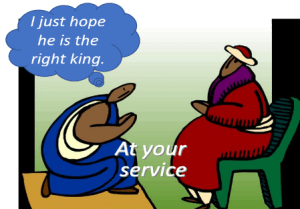
30bSomebody is terribly mistaken here! As Isaiah 1:17 indicates, a desire for justice is good, but if predicated on a reckless theory of justice, such passion can be a great force for injustice. We can have all the fervor of a patriotic warrior as we march off to the grand, glorious war for social justice, but if we have pledged allegiance to the wrong ideological king, we may find ourselves making the nations much worse off. An earnest search for wisdom, knowledge, and God’s justice can go a long way toward making sure our social justice arrows hit the right targets.

One man’s justice is another’s injustice. It is a reality that there are many good, reasonable people who radically differ on the nature of justice. Spiritual discernment is needed to prudently sift through the various claims and mandates concerning things like racial fairness, sexual oppression, human rights, socio-economic opportunity, and religious freedom.

Here, we, as believers, must allow God’s Word to guide us during the formation of our views.  Today’s Scriptures remind us, first, to seek a justice that shows no favoritism to anyone: whether white or black, rich or poor, traditionally marginalized or historically privileged, for to do otherwise is to dishonor God; second, to seek a justice that looks out for those who are weak and easy to overlook, showing no partiality but making sure that they are included as part of justice for all; and finally, to seek a justice that obeys God, no matter how counter-cultural, unpopular, or unpalatable it might be (2 Cor. 10:5), for our God is a good God and in His social justice alone do we place our hope!

Prayer: God, before Your mighty and holy presence, I ought to tremble, for I’m weak and unholy.  But in Your justice and love, You had your Son to die to atone for my sins, so that I can be Your child who need not fear.  Help me to be just and loving, so that I can be Your witness in this hopeless world.  Amen.

Bible Reading for Today: Judges 8


LUNCH BREAK STUDY

Read Col. 2:16-7: Therefore let no one pass judgment on you in questions of food and drink, or with regard to a festival or a new moon or a Sabbath. 17 These are a shadow of the things to come, but the substance belongs to Christ.

Jn. 8:11:  And Jesus said, “Neither do I condemn you; go, and from now on sin no more.”

Gal. 6:2: Bear one another’s burdens, and so fulfill the law of Christ

Questions to Consider

  1. Is it true that God’s Word itself has undergone changes? For instance, Paul says here that it is okay to eat the kind of food that was prohibited in the OT (1 Tim. 4:4-5). How do you explain that?
  2. What is the law of Christ? What relationship does it have with the laws found in the OT?
  3. Based on the findings from questions 1 & 2, would it be reasonable to include that God’s Word continues to be authoritative in all matters, including social justice?

Note

  1. Yes and no—the form has changed but not the meaning. The strict dietary laws were given to the Jews in antiquity to distinguish Israel from the surrounding pagans. Maintaining the ethnic purity of the Jews was important, since God had preordained Jesus to come from the lineage of David, the tribe of Judah of Israel.  Today, such dietary injunction has no value to the NT believers, who are, nonetheless, expected to distinguish themselves from their surroundings through holy living (i.e., not living according to the norms and values of the world).
  2. The law of Christ refers to all ethical, moral and theological teachings recorded in the NT. There are many OT laws that are no longer relevant in the NT in a literal sense (e.g., Heb. 10:18).  For instance, stoning a sinner is not part of the law of Christ.  But, most moral commands in the OT have been transferred to the law of Christ, such as injunction against adultery, stealing, love of money, etc.
  3. Yes, God’s Word continues to be authoritative because the meaning has not changed—and that’s what matters the most!

EVENING REFLECTION

We began the day talking about social justice and the need to base it on the unchanging Word of God, which is “alive and active. Sharper than any double-edged sword, it penetrates even to dividing soul and spirit, joints and marrow; it judges the thoughts and attitudes of the heart” (Heb. 4:12).

So, how is your attitude toward the Scripture?  Can you really say you cannot live without it (Mt. 4:4)?  Regardless of how you respond, a better barometer is what you actually do with your Bible: Do you read it?  How often?  Do you study it?  How seriously?  Meditate on the godly habit of the Berean Christians and pray for God’s strength to imitate them.

Acts 17:11: Now the Berean Jews were of more noble character than those in Thessalonica, for they received the message with great eagerness and examined the Scriptures every day to see if what Paul said was true.

January 29, Sunday

joanna2The AMI QT Devotionals for January 28-29 are provided by Joanna Tzen.  Joanna graduated from U. Penn and currently works in Philadelphia.  She married Paul in 2014, and they attend Grace Covenant Church.

P. Ryun’s series will continue on Monday.

DEVOTIONAL THOUGHT FOR TODAY

Matthew 7:21

“Not everyone who says to me, ‘Lord, Lord,’ will enter the kingdom of heaven, but only the one who does the will of my Father who is in heaven. 22 Many will say to me on that day, ‘Lord, Lord, did we not prophesy in your name and in your name drive out demons and in your name perform many miracles?’ 23 Then I will tell them plainly, ‘I never knew you. Away from me, you evildoers!’

29Yesterday, we talked about Sabbath, but maybe there is the question of whether this is even necessary, practical, or applicable in today’s world. I know that in my own life, there were instances where I misinterpreted the need for Sabbath as a weakness. Clearly, I was equating my worth to my productivity. So if I saw a need or an opportunity was presented, I quickly accepted. Though some good still came out of those decisions, it often came at the greater expense of my relationship with God or others, or other priorities to which I was committed.

Perhaps you can relate and ask yourself when new opportunities are presented in the new year, Am I adding one more thing because I have equated my worth to my work? Or, How might this impact my relationships or other priorities God has made clear in this season? 

Let’s humbly approach the Lord and ask that He remind us of how our worth is rooted in who we are and not what we do. We are not defined by the number of activities on our calendars or tasks accomplished for school, church or work. Let’s not do many things for Jesus to earn salvation that has already been secured for us, but instead draw near to be with Jesus first.

Prayer: Lord, if I have placed my worth in my doing, may You remind me that it is not my works that will save me, but I am saved by grace, through faith (Eph 2:8-9). You are not a means to an end, but the end itself. In the security of the Lord’s truth of who I am as a child of God, I ask for wisdom and discernment as to how You are calling me to build up Your kingdom in the season in which You have uniquely placed me. Amen.

Bible Reading for Today: Judges 5-6

January 28, Saturday

joanna2The AMI QT Devotionals for January 28-29 are provided by Joanna Tzen.  Joanna graduated from U. Penn and currently works in Philadelphia.  She married Paul in 2014, and they attend Grace Covenant Church.

P. Ryun’s series will continue on Monday.

DEVOTIONAL THOUGHT FOR TODAY

Exodus 31:12-3

Then the Lord said to Moses, 13 “Say to the Israelites, ‘You must observe my Sabbaths. This will be a sign between me and you for the generations to come, so you may know that I am the Lord, who makes you holy.

29I’ve been reading a book titled Emotionally Healthy Leader, where the author interestingly brings up the topic of the Sabbath. So what exactly is a Sabbath? Is it an Old Testament practice that we no longer observe as Christians?

In the Bible, observing the Sabbath is one of the commandments that were given to the Israelites through Moses. They practiced the Sabbath not only because even God rested on the seventh day from the work of creation, but because this observance showed the surrounding peoples that the Israelites trusted God. They would not farm or work on this day; they would rest in God and trust Him.

As time passed, Sabbath had become obligatory restrictions that man added on to; so by Jesus’ time, the teachers confronted Jesus and His disciples for gleaning grain on the Sabbath. That is when Jesus said, “The Sabbath was made for man, not man for the Sabbath. So the Son of Man is Lord even of the Sabbath” (Mark 2:27-28).

This passage might come to mind for many Christians when they hear the word Sabbath. Why should we as Christians practice it? Isn’t it legalistic? If the purpose is to set aside time to know that God is holy and to worship Him, as well as to recognize our own limits, perhaps it is worth thinking about in our world. As we are constantly bombarded with the lie that we are what we do, I think this practice helps us to ask some hard questions: Are we defining ourselves by our productivity, regardless of whether that work is at church, school or the workplace? What keeps us from resting in God? Are we unconsciously trying to earn God’s salvation?

Prayer: Lord, examine my heart and show me if I have believed the lie that I am what I do. Could it be that I am unable to rest because I am afraid of what I will find within when I am not producing? If I have believed this lie, please forgive me of this and replace it with the truth that I am a beloved child of God, and that what I do does not define me. Help me to rest in the security of Your promises, rejoicing in the salvation You have already secured for me. Amen.

Bible Reading for Today: Judges 5-6

January 27, Friday

Pastor Ryun Chang (AMI Teaching Pastor, Ph.D.) will present a series of blogs, dealing with various issues raised in the recent election that showed a deep divide, impacting both society at large and the church.  The thoughts presented are processed through the lens of the Radical-Middle (both/and), personal narratives, and pastoral concerns.  Your rational feedback is welcomed.

Disclaimer: The views expressed here do not necessarily represent the respective views of AMI pastors.

DEVOTIONAL THOUGHT FOR TODAY

Our Brothers Who are Easily Forgotten in the Israeli-Palestinian Conflict

Hebrews 11:10 (NIV)

For [Abraham] was looking forward to the city with foundations, whose architect and builder is God.

27aThe recent United Nations Security Council’s resolution to condemn Israeli settlement in territories taken during the Six-Day War (1967) continues to stir passion on both sides.  While U.S. support for Israel may not be what it used to be, Christians who believe in the literal fulfillment of end-time prophecies are squarely on the side of Israel.  Yet, in the midst of this bitter conflict, we have forgotten a people whom the believers have more in common with than the Israelis.

27bIn 2015, while attending a conference on theological education in Turkey, I befriended a theological educator named Jiries from Jordan.  He is a Palestinian.  Never having met a Palestinian Christian before, I cautiously asked, “How do you feel about American Christians unilaterally supporting Israel?”  Jiries answered, “It’s a matter of human interpretation of the Bible on the one hand, and God’s justice on the other.”  I understood what he meant by “human interpretation,” but since I didn’t get the justice part, I asked for an explanation.  The following is his story.

“I was born in Lydda[1] (Lod) near Tel Aviv in 1944—four years before the establishment of Israel as a state in Palestine.  In Nov. 1947, the United Nations divided Palestine into Arab state and Jewish state; Lydda was in the part allocated to the Palestinian Arab state. In July 1948, because the Israelis took control of Lydda and expelled its population, my family, including my pregnant mother and three children under the age of four, left home on foot.  Walking several hours and spending the night in the open air, we met Jordanian soldiers, who took us to a small town in the remaining part of Palestine.  Since then, I’ve lived in Jordan—and I can’t go back to my home and my landWhere is justice in that?”

I had no response; in fact, moved by what this brother said, I promised to share the plight of Palestinian Christians in an ensuing conference in Hong Kong, where I was scheduled to speak.  But while preparing for the message, I suddenly felt this urge to share what I believed the Spirit placed in my heart.  So, in an email I wrote: “Jiries, ultimately you know that this is not our home, for we are ‘aliens and strangers on earth.  People who say such things show that they are looking for a country of their own.  If they had been thinking of the country they had left, they would have had opportunity to return.  Instead, they were longing for a better country—a heavenly one’ (Heb. 11:13-6).  Of all people, you must know this better than anyone else.”  Jiries later wrote me back, saying, “Thank you for your interest and being fair.  Blessings.”

This blog isn’t about political policy but spiritual tension that demands Christ’s followers to move from either/or to both/and.   First, the needs of the Palestinian brothers in Christ shouldn’t be ignored, since we are commanded to “do good to all people, especially to those who belong to the family of believers” (Gal. 6:10).  So, while they wait for “a better country—a heavenly one,” we pray that safe places are found for them to raise their families.

What about Israel?  Jiries, in a later communication, wrote, “When we think of the present situation, we pray for three issues: justice, peace and mercy of God for all, including Israel whose existence I validate according to all United Nations’ resolutions.”  While I understand Jiries’ position, I find myself increasingly frustrated with the UN’s overall mission in the world.  My support for Israel’s right to exist, therefore, doesn’t stem from any UN resolution but God’s Word, “for if the Gentiles have shared in the Jews’ spiritual blessings, they owe it to the Jews to share with them their material blessings” (Rom. 15:27).  Thus, at the very least, we should support Israel’s need for safe places—free from terror—to raise their families; we also pray that they come to a saving knowledge of Yeshua, and enter one day “the city with foundations, whose architect and builder is God.”

Prayer: Lord, we pray for the governing bodies represented at the United Nations to treat the Israeli-Palestinian conflict with fairness for all.  We pray for the peace of Jerusalem (Ps. 122:6) and that many Israelis will come to believe in Jesus.  We also pray for the well-being of Palestinian Christians.  Amen.

[1] Lydda is mentioned in Acts 9: 32-35.

Bible Reading for Today: Judges 4


LUNCH BREAK STUDY

Read Gal. 3:28-9 (ESV): There is neither Jew nor Gentile, neither slave nor free, nor is there male and female, for you are all one in Christ Jesus. 29 If you belong to Christ, then you are Abraham’s seed, and heirs according to the promise.

Gal. 6:5: For neither circumcision counts for anything, nor uncircumcision, but a new creation.

2 Cor. 5:27a: Therefore, if anyone is in Christ, he is a new creation.

Questions to Consider

  1. What is the basis for Christian brotherhood?
  2. What does it mean that there is neither Jews nor Gentile, slave nor free, male nor female in Christ Jesus?
  3. If we truly understand Christian brotherhood, then what kind of church should we strive to be?

Notes

  1. Regardless of our ethnicity, class or gender identity, once we believe in Jesus, we all belong to Christ—we are all one in Him.
  2. When we are in Christ, all ethnic, class and gender differences are melted into a new creation. “In Christ” is a spiritual melting pot in which all our sins are washed away (i.e., forgiven) by the atoning blood of Jesus.
  3. A church that doesn’t discriminate based on ethnicity, class and gender; a church where everyone is welcomed whether they are white, yellow, black, rich, poor, educated, not educated, etc.

EVENING REFLECTION

Before it was called Palestine, the place where Israelis and Palestinians live today was called Canaan.  It was to this place—a land of milk and honey—that God had called the enslaved Jews in Egypt to enter.   The Jews’ claim to this land is based on the Old Testament, but while they were absent from Canaan for nearly 2,000 years, the Palestinians have lived there for centuries.  Certainly, they both have a compelling case for having a stake in the land.  I share this so that you can pray for these people, that there will be prosperity (milk and money) for all, and a genuine revival among them so that the dividing wall of hostility would be finally demolished.

For he himself is our peace, who has made us both one and has broken down in his flesh the dividing wall of hostility (Eph. 2:14).