Devotional Thoughts for Today
Mk 4:20 (NIV): “Others, like seed sown on good soil, hear the word, accept it, and produce a crop—some thirty, some sixty, some a hundred times what was sown.”
 In the NBA, no one could stop Shaquille O’Neil in his heyday; once this powerful player had the ball in the paint area, any strategy used against him mattered very little him—he almost always made a basket.
 While the quality of the soil certainly affects whether the seed reaches its fullest potential, it can grow, however anemic, under almost any soil. In another parable, Jesus spoke of how “night and day, whether the [sower] sleeps or gets up, the seed sprouts and grows, though he does not know how” (Mk. 4:27). Still in another parable, the Lord explained that as long as a kernel “falls to the ground . . . it produces many seeds” (Jn. 12:24). Apostle Paul, in speaking of those who preached God’s word (i.e., sowed the seed) with a wrong motive, said, “The important thing is that in every way, whether from false motives or true, Christ is preached” (Phil. 1:18). What do these verses indicate? Regardless of the listener’s receptivity or the preacher’s motive, because “the word of God is living and active[,] sharper than any double-edged sword , it penetrates even to dividing soul and spirit, joints and marrow; it judges the thoughts and attitudes of the heart” (Heb. 4:12 NIV).
One main issue with Shaq’s teams was always getting the ball to him when he was in the paint area near the basket. But it was up to the point guard who, after bringing the ball up the court, could either pass it to Shaq or shoot it himself. However, Shaq was much more likely to make a basket from his sweet-spot than a guard who shot from afar. The question to us is how to make that pass from the outside (i.e., attitudes not conducive for effective listening) to the sweet-spot, which is inside (i.e., the right attitude), so that we can consistently score a basket (i.e., bearing much fruits in terms of character, right conduct, winning souls, etc. ).
First, no matter who may be the speaker, obligate yourself to receive a blessing even if the only coherent thing done was reading the Scripture, since that is God’s word. Paul says to the Thessalonians, “We also thank God . . . because, when you received the word of God, which you heard from us, you accepted it not as the word of men, but as it actually is, the word of God” (1 Thess. 5:13). What’s the outcome of this? The apostle concludes that verse with this: “…which is at work (i.e., produces a crop) in you who believe.” Second, imitate the Bereans “who received the message with great eagerness and examined the Scriptures every day to see if what Paul said was true” (Acts 17:11). Luke, instead of saying, “How dare you examine Paul’s words!” but rather described them as “noble character.” Lastly, “do not merely listen to the word, and so deceive yourselves. Do what it says” (James 2:22). Start practicing this today.
Bible Reading for Today: Isaiah 21
 It had been nearly 70 years since many Israelites (including Daniel and Ezekiel) were forcibly taken to Babylonia as exiles, but unexpectedly, their life there was comfortable as Jeremiah had prophesized: “Seek the peace and prosperity of the city to which I carried you into exile” (Jer. 29:7). But one day, God moved their heart (Ez. 1:5) through Cyrus, the king of Persia, who said to the Jews, “Anyone of his people . . . let him go up to Jerusalem . . . and build the temple of the LORD” (1:3).
 But around the time the work had ceased for 16 years, God sent Haggai to remind the exiles about why they had left Persia in the first place. Their response was so underwhelming that God said, “These people say, ‘The time has not yet come for the LORD’s house to be built. . . .’ Is it a time for you and yourselves to be living in your paneled houses, while this house remains a ruin” (Hag. 1:2-3)? These once-committed people had become callous, and instead of admitting their unwillingness to rebuild the temple, they flippantly said that it wasn’t the right time. Meanwhile, they busied themselves by building a mansion (paneled house) for their own home.
 These examples point to a “shallow faith” (i.e., seed sown on rocky places) in which the initial joy of hearing God’s word (the gospel) is short-lived because of trouble or persecution. Typically, having no root refers to Christians who lack knowledge of God’s word, resulting in their faith being destroyed (Hos. 4:6). This doesn’t necessarily mean having no biblical knowledge; rather, whatever knowledge they had was incorrect, therefore, their faith was utterly helpless to withstand trouble or persecution. It is as if they were caught by surprise because they didn’t know or no one taught them that “in this world you will have trouble” (Jn. 16:33); or even if you are a Christian, “It has been granted to you on behalf of Christ not only to believe on him, but also to suffer for him” (Phil. 1:29).
 At the root of our faith, what’s crucial is not so much the extent of biblical knowledge but whether we know correctly the crux of God’s will revealed in the Scripture. For instance, some know by heart numerous verses that allegedly back the health and wealth gospel. One prosperity teacher declared, “If I walk justly and according to the Word of God, I am completely convinced that I can be free of sickness and pain.” Another declared, “God’s top priority is to shower blessings on Christians in this lifetime.” But when a loved one gets really sick, or you are barely making ends meet despite giving generously, the very teaching that appeared so promising becomes a stumbling block; you may fall as a result.
 Mk. 4:2-8 (NIV): “He taught them many things by parables, and in his teaching said: [3] ‘Listen! A farmer went out to sow his seed. [4] As he was scattering the seed, some fell along the path, and the birds came and ate it up. [5] Some fell on rocky places, where it did not have much soil. It sprang up quickly, because the soil was shallow. [6] But when the sun came up, the plants were scorched, and they withered because they had no root. [7] Other seed fell among thorns, which grew up and choked the plants, so that they did not bear grain. [8] Still other seed fell on good soil. It came up, grew and produced a crop, some multiplying thirty, some sixty, some a hundred times.’”
 Once, there was this elderly pastor (Hong) whose sermon I didn’t care to listen to. At the time, I was part of an in-house discipleship training at my church along with other young men. Our day began with a 5:30 AM prayer meeting, which we attended mostly out fear of our pastor who would discipline us if we didn’t attend; so whenever he was out-of-town, most of us slept in. But this greatly upset Pastor Hong who used every pulpit opportunity to call us out as hypocritical, lazy bums. Naturally, whenever he spoke, I gladly let the evil one snatch away his word.
 The church where I became a believer in 1981 was steeped in end-times Bible prophecy. My fascination with this grew all the more after seeing Christian movies, such as “A Thief in the Night” and “Image of the Beast,” which portrayed a terrifying world following the rapture. My ears perked up when several respectable pastors predicted the Lord’s coming in 1988. The fact that the prediction didn’t come true that year hasn’t stopped others from setting other dates (e.g., Harold Camping-2011).
 One consequence of failed date-setting is an increased disinterest in Christ’s coming. Anticipating this, Peter wrote: “They will say, ‘Where is this “coming” he promised? Ever since our fathers died, everything goes on as it has since the beginning of creation’” (2 Pet. 3:4). I plead guilty to that because I went from passionately teaching the end time prophecy to becoming somewhat unenthused about reading the book of Revelation (always as the last book while reading the Bible in a year).


 Luke, being a Gentile, knew that the Jews didn’t want to share God’s blessing with people like him. In his later book, Acts, he recounted how the Jews sought to kill Paul (“Rid the earth of him! He’s not fit to live!” 22:22) just because he declared, “The Lord said to me, ‘Go; I will send you far away to the Gentiles” (22:21). Luke also noted that the Jews who were dispersed from the persecution in Jerusalem, shared the gospel only with other Jews—most of them simply didn’t care about the spiritual welfare of the Gentiles. Having been tossed around by the Grecian, Ptolemaic, Seleucid, and Roman Empire for four centuries, the Israelites were in no mood to share God’s blessings with them.
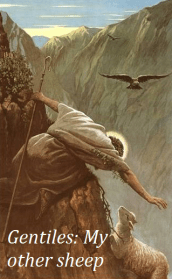 Evidently, Luke, writing his Gospel to Theophilus—likely a high Roman official—had a mission to declare to the Gentiles that the lost sheep, the lost coin, and the lost son in the parables represented them, and a search would be made to find them. Unlike the older son who didn’t care whether his brother lived or died, another Son, “the firstborn of all creation” (Gal. 1:15) “came to seek and to save the lost” (Lk. 19:10). That is, the Gentiles are the other sheep that Jesus came to find: “I have other sheep that are not of this sheep pen. I must bring them also. . . . There shall be one flock and one shepherd” (Jn. 10:16).
 The Christian faith in the wrong hands can turn into a weapon to condemn others, thereby one can feel superior about oneself. Recall the prayer of the Pharisee who said, “I thank God that I am not like other men—robbers, evildoers, adulterers” (Lk. 18:10). But in Luke 15, Jesus presents the parable of lost sheep, coin and son to show that “the Son of Man came to seek and to save the lost” (Lk. 19:10). So, we see that the shepherd and the woman immediately set out to find what was lost; both say, “Rejoice with me” (Lk. 15:6, 9) upon finding it. However, no one is looking for the younger son. Theologian Edmund Clowney, when asked if culturally the father would’ve gone out looking for the son, responded, “The older brother would have done that”; but the older brother in the parable stays put.
 At the very least, the Pharisees, whom the older son represents, were known to “travel over land and sea to win a single convert.” Their problem was the message which made their convert “twice as much a child of hell as [they] are” (Matt. 23:15). But the older son is acting worse than the Pharisees: first, he thinks worst of his brother, assuming his association with prostitutes (something Jesus never said); second, he doesn’t care whether his brother is alive or dead. While the older son has always been near his father physically, his heart is as far from the father’s as east is from the west; while the father rejoices, the older son growls at the return of his brother.
 During my earlier days as a Christian, I made up some good rules for myself so that I could please God. Each day in my monthly calendar, I recorded how long I prayed (timed to seconds), how many chapters of the Bible I read, etc. I felt great about myself for a while (partly because I was out-performing others), but once I couldn’t keep it up (lots of zeroes), I felt like God was displeased and even angry with me; as a result, I was joyless and felt bound.
 The Pharisees, Israel’s religious leaders, to whom this parable was told (15:2), knew that the “older son,” who couldn’t stand his younger brother, represented them. They, too, couldn’t stand the sight of those whom they dubbed as “sinners,” consisting of tax collectors, who corroborated with the hated Romans, and prostitutes. Why? Because these spiritual lowlifes weren’t as holy and righteous as they who kept God’s laws. Thus, they prayed, “God, I thank you that I am not like other men—robbers, evil doers, adulterers. . . . I fast twice a week and give a tenth of all I get” (18:11-2). In their zeal to further differentiate themselves, the Pharisees tagged on additional rules, “such as the washing of cups, pitchers, and kettles” (Mk. 7:4). Upon seeing those who didn’t keep their rules, the Pharisees condemned them, even saying to Jesus, “Why don’t your disciples live according to the tradition of the elders” (7:5).
 As for the skit, the team presented two prodigal sons who, after the weeklong party, are told by the father to rise up early to work; being grateful, they eagerly assure him that they would. But once the morning arrives, the undisciplined sons struggle to rise: while son #1 never does, son #2 shows up late. The father isn’t upset, but understanding. By the end of the week, son # 1 finally arrives on time, while the other son, seeing that he doesn’t get punished, becomes brazen and makes no effort to get up to work. Finally, the father pays the sleeping son a visit; meanwhile, the audience assumes that he is going to punish the son for taking his grace for granted. Instead, the father says to his lazy and ungrateful son, “Let’s go have lunch.” At that moment, the song based on Romans 2:4 is played: “It’s your kindness that leads us to repentance, O Lord, knowing that you love us, no matter what we do, makes us want to love you too.”