Editor’s Note: The AMI Quiet Time for today is provided by Cami King of JCC.
Devotional Thoughts for Today
Esther 8:15-17
Then Mordecai went out from the presence of the king in royal robes of blue and white, with a great golden crown and a robe of fine linen and purple, and the city of Susa shouted and rejoiced. 16 The Jews had light and gladness and joy and honor. 17 And in every province and in every city, wherever the king’s command and his edict reached, there was gladness and joy among the Jews, a feast and a holiday. And many from the peoples of the country declared themselves Jews, for fear of the Jews had fallen on them.
 There are moments in life when God’s faithfulness comes into focus, when we go past trusting in God’s promises to experiencing them in their fullness in our personal lives. Those are precious moments. Mordecai and the people of God are having one such moment. They have walked through hardship and persecution, through fear and uncertainty, they’ve fasted and prayed, hoped and depended upon the Lord; and now they are delighting in the fruit of God’s faithfulness. And moreover, because of their dependence upon God through difficulties, many others have come to know the Lord as well – they saw that God’s blessing was upon the Jews and wanted in.
In John 12:32, Jesus says, “And I, when I am lifted up from the earth, will draw all people to myself.” In this, of course, Jesus was predicting the manner in which He would die and the pervasive salvation that would be made available to all people as a result. And in a small way, when God’s people walk faithfully through adversity, we are used by God to make Him known (lift Him up) and draw others into a relationship with Him. This should encourage us whenever we face adversity – knowing that the work God is doing in and through us is more than worth the sacrifice. But even more so than encouragement to persevere, our passage for today should elate us at the possibilities of what the end result will be for those who trust in the Lord. God is truly able to do immeasurably more than all we ask or imagine, and His track record shows that He is not only able, but He is willing.
Though we may find ourselves walking through difficulties and facing obstacles, may we be encouraged by the story of Mordecai, Queen Esther, and the people of God! Let us remind our hearts of God’s faithfulness and celebrate not only what He will do for us, but what He is able to do in the hearts of others through us.
Prayer: Heavenly Father, thank you for your faithfulness. You are a promise keeper and I trust in You. Help me to walk faithfully through the storms of life, for I know they will come, and to wait upon You. In Jesus’ name. Amen.
Bible Reading for Today: John 18

Lunch Break Study
Psalm 23:1-6
The Lord is my shepherd; I shall not want.
2 He makes me lie down in green pastures.
He leads me beside still waters
3 He restores my soul.
He leads me in paths of righteousness
for his name’s sake.
4 Even though I walk through the valley of the shadow of death,
I will fear no evil,
for you are with me;
your rod and your staff,
they comfort me.
5 You prepare a table before me
in the presence of my enemies;
you anoint my head with oil;
my cup overflows.
6 Surely goodness and mercy shall follow me
all the days of my life,
and I shall dwell in the house of the Lord
forever
Questions to Consider:
- What keeps David from fearing evil in verse 4? How have you experienced the truth of his words when you walked through valleys?
- What do you think it means that goodness and mercy shall follow (v. 6)? How have you experienced this in your life?
Notes:
- One Bible translation renders “valley of the shadow of death” as “darkest valley” – this accurately describes the feeling of suffering. It’s hard to make sense of what’s going on around us; we can’t see very far ahead of us, and we definitely can see all the way to the end of the struggle. But David does not fear because the Lord walks through the valley with him. Not only does David have the comfort of not going alone in the dark, but he has the reassurance of knowing that He is with the One who knows all and holds all power in His hands.
- What is translated as “follow” can easily be translated “pursue” – and I think the latter paints a better picture of God’s care for us. God’s goodness and mercy (loyal-love) are so great and so persistent that they hunt us down, no matter what dark valley we’ve stumbled into. His love will find us and care for us.
Evening Reflection
But this I call to mind,
and therefore I have hope:
22 The steadfast love of the Lord never ceases;
his mercies never come to an end;
23 they are new every morning;
great is your faithfulness.
24 “The Lord is my portion,” says my soul,
“therefore I will hope in him.”
25 The Lord is good to those who wait for him,
to the soul who seeks him.
26 It is good that one should wait quietly
for the salvation of the Lord. (Lamentations 3:21-26)
Spend some time meditating on these truths tonight (read, then reread – slowly and thoughtfully – and contemplate with the Lord). Allow the Holy Spirit to use them to minister to you in whatever you may be facing.
 If I were to respond to the ending of Haman’s story in emojis, I would have to use the little face with wide eyes, raised brows, and utter confusion (sorry to android users for the lost pop culture reference). At the start of this narrative, it’s certainly hard to see this ending coming. I’m sure it caught Haman by surprise as well. We’ve all heard the saying, “Evil never prospers.” As kids we might have been told this by our parents or teachers who caught us doing something underhanded or conniving or deceitful (as most children begin to do after their toddler years). But from the story of Haman, we learn that not only will evil not prosper, but it will have the absolute averse effect in our lives.
 The story of queen Esther is a familiar one. Esther, with fear and trembling, goes before the king to make a request that could cost her life. Yet she does so knowing that it was what she must do to save her people, believing the potential sacrifice to be more than worth the potential outcome. Her confidence, as we learned yesterday, came from the Lord her God, whom she knew was at work in the unseen to protect and defend His people. And we see today that her boldness and courage paid off. She was granted her request before a king with whom she found favor – and many were saved as a result. What an amazing opportunity and immense power available to Esther. And what a worthy way to utilize it!
 If you have been following the NFL this season, you know that the Carolina Panthers are currently undefeated. Out of eleven games played, they have won eleven – no one has beaten them. Their quarterback, Cam Newton, has been quite dominant this season leaving many wondering, can he and the Panthers be overcome?
 Have you ever done something, thinking you would earn recognition, only to find that no recognition or honor was given? That can often be quite painful. It feels good to be recognized, to get that high-five or pat on the back or that “good job.” But sometimes, no one notices what we do. We are left hanging, like an unreciprocated high-five.
 I remember one time as a college student, I posted a photo on Facebook showcasing all the books I had recently purchased, captioned with a declaration that I would be reading them all throughout winter break. I received so many approving “likes” and comments that spoke to my productivity and refined choice of leisure, but here’s a belated update to that highly publicized goal of mine: I didn’t even finish a single book. While it wasn’t my plan to deliberately deceive people, the acknowledgement I received from sharing my goal gave me a false sense of accomplishment and thereby weakened my resolve to actually read.
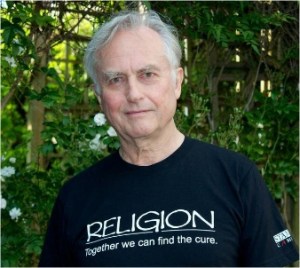 Atheist Richard Dawkins said, “The God of the OT is . . . a petty, unjust . . ., a vindictive, bloodthirsty . . . bully.” His evidence: God’s command to King Saul to “attack the Amalekites and totally destroy everything that belongs to them”—including “men and women, children and infants” (1 Sam. 15:3).
 After the end of a long drive from Philadelphia to Houston to take my youngest child to college, it was nice to sit in a cool auditorium, listening to several speakers in a program called “New Families Orientation.” As was customary, before the speakers approached the podium, the master of the ceremony read off a long of list of their academic pedigrees and accomplishments. Although it wasn’t quite the same sensation as seeing a Harvard Medical School diploma hung on the office of my new doctor, knowing that these speakers weren’t “hacks” put me at ease.
 In 597, Pope Gregory the Great sent Augustine of Canterbury (not St. Augustine of Hippo) along with forty monks to Great Britain in hopes of evangelizing the Anglo-Saxons who lived there. But upon arrival, seeing buildings with crosses, they realized that someone had already beaten them to it. No one knows who first evangelized the Anglo-Saxons, but their church was known as the “Celtic Church” (which earlier produced the great missionary St. Patrick in the 5th century). In time, Augustine, after learning about this church, insisted that the Celtic Christians adopt the Catholic way (e.g., celebrating Easter on the Sunday following Passover instead of on the day of Passover). In an important meeting in which the two sides were to talk, it is believed that Augustine—the pope’s deputy no less—greatly offended the Celtic delegation when he refused to get up to greet them. Suffice it to say, they were off to rocky start.
 Some might question: “Esther, should you be hosting back-to-back dinner parties when life and death of hundreds and thousands of your people is hanging in the balance?” To fault Esther for her alleged indifference is no different than questioning the sanity of King Solomon for ordering that the baby in dispute, between two women claiming to be his mother, be cut in two so that each could have half (1 Kings 3:24). Rest assured that Esther was not only valiant (“If I perish, I perish”), but she was also wise, much like Solomon who knew that the real mother would rather lose the baby than let him be sawed in two.