Editor’s Note: The AMI Quiet Time for today is provided by Christine Chang of GCC.
Devotional Thoughts for Today
Matthew 6:1-5
Beware of practicing your righteousness before other people in order to be seen by them, for then you will have no reward from your Father who is in heaven. 2 Thus, when you give to the needy, sound no trumpet before you, as the hypocrites do in the synagogues and in the streets, that they may be praised by others. Truly, I say to you, they have received their reward. 3 But when you give to the needy, do not let your left hand know what your right hand is doing, 4 so that your giving may be in secret. And your Father who sees in secret will reward you. 5 And when you pray, you must not be like the hypocrites. For they love to stand and pray in the synagogues and at the street corners, that they may be seen by others. Truly, I say to you, they have received their reward. 6 But when you pray, go into your room and shut the door and pray to your Father who is in secret. And your Father who sees in secret will reward you.
 I remember one time as a college student, I posted a photo on Facebook showcasing all the books I had recently purchased, captioned with a declaration that I would be reading them all throughout winter break. I received so many approving “likes” and comments that spoke to my productivity and refined choice of leisure, but here’s a belated update to that highly publicized goal of mine: I didn’t even finish a single book. While it wasn’t my plan to deliberately deceive people, the acknowledgement I received from sharing my goal gave me a false sense of accomplishment and thereby weakened my resolve to actually read.
Contrary to a commonly held assumption that sharing personal goals with others helps us complete them, a recent article from The Berkeley Science Review titled, “When Telling Others About Your Goals Compromises Them,” explains that when it comes to identity goals (goals to achieve a certain identity), receiving social recognition before enacting on a plan can lead to “a premature sense that one already possesses the desired identity.”
While there’s certainly a time and place for accountability, our present culture thrives on over-sharing the details of our lives, especially through social media. It gets harmful when we forget what it feels like to do things in secret, without expecting any human acknowledgment at all. In Matthew 6:6, when Jesus tells us to “go into your room and shut the door and pray to your Father who is in secret,” the room described here was commonly located at the center of a house to store dry goods, and it had no windows. Tim Keller points out that of all the spiritual disciplines, the one that nobody can see is secret prayer—and its absence or presence in our lives reveals our true motive for following God.
When you are all by yourself, do you pray naturally? Do you often feel the need to be recognized for reading the Bible or praying? As humans, I think we’ve all engaged in spiritual acts to satisfy our need for human approval, but as we enter a secret time of prayer, God reveals the hollowness of our actions and then engages our souls with His grace and mercy until His presence is our sole desire. Let’s continue praying corporately while also developing a secret prayer life that deepens our awareness that Jesus alone can satisfy.
Prayer: Father, I’m sorry for the times when I’ve outwardly lived a life for You but inwardly satisfied my own desires. I want to experience the sweetness of praying to You in secret, where my words are honest and vulnerable; where the stillness quiets my soul; where Your gentle whisper penetrates my heart. Amen.
Bible Reading for Today: John 12

Lunch Break Study
(Provided by Pastor Ryun Chang)
Read Proverbs 18:24: A man of many companions may come to ruin, but there is a friend who sticks closer than a brother.
Micah 7:5b: Put no trust in a neighbor; have no confidence in a friend . . .
Jn. 15:13: Greater love has no one than this, that someone lay down his life for his friends.
Question to Consider
- What do these seemingly disparate verses suggest?
- What is the major difference between the biblical friendship as opposed to Facebook friendship?
- Abraham was called God’s friend (James 2:23). What made him so? What kind of a friend are you to the Lord? What does that even mean?
Notes
- While we need friends, we don’t need many friends; instead, we need few true ones.
- The Facebook friendship is quantitative and artificial, and exists, for the most part, to amuse each other; the biblical friendship is qualitative and real, and exists to help each other sacrificially.
- The entire James 2:23 reads, “And the scripture was fulfilled that says, ‘Abraham believed God, and it was credited to him as righteousness,’ and he was called God’s friend.” It seems like one key prerequisite to being God’s friend is having faith in Him. What does that mean? That we have the confidence that God will do what He said He would. Do you have that confidence in God? If you do, then, you are on your way to becoming His friend!
Evening Reflection
We talked about friendship today. Haman didn’t know until it was too late that he really had no friends. Did you get to speak to any of your friends today? How would you appraise the depth of your friendship? Do you know what to pray for them? If not, then, perhaps your relationship needs a major tune-up. The first step always is to go to our ultimate Friend, God, and ask Him to empower and motivate us to be a trustworthy friend. Pray.
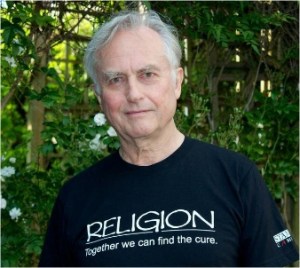 Atheist Richard Dawkins said, “The God of the OT is . . . a petty, unjust . . ., a vindictive, bloodthirsty . . . bully.” His evidence: God’s command to King Saul to “attack the Amalekites and totally destroy everything that belongs to them”—including “men and women, children and infants” (1 Sam. 15:3).
 After the end of a long drive from Philadelphia to Houston to take my youngest child to college, it was nice to sit in a cool auditorium, listening to several speakers in a program called “New Families Orientation.” As was customary, before the speakers approached the podium, the master of the ceremony read off a long of list of their academic pedigrees and accomplishments. Although it wasn’t quite the same sensation as seeing a Harvard Medical School diploma hung on the office of my new doctor, knowing that these speakers weren’t “hacks” put me at ease.
 In 597, Pope Gregory the Great sent Augustine of Canterbury (not St. Augustine of Hippo) along with forty monks to Great Britain in hopes of evangelizing the Anglo-Saxons who lived there. But upon arrival, seeing buildings with crosses, they realized that someone had already beaten them to it. No one knows who first evangelized the Anglo-Saxons, but their church was known as the “Celtic Church” (which earlier produced the great missionary St. Patrick in the 5th century). In time, Augustine, after learning about this church, insisted that the Celtic Christians adopt the Catholic way (e.g., celebrating Easter on the Sunday following Passover instead of on the day of Passover). In an important meeting in which the two sides were to talk, it is believed that Augustine—the pope’s deputy no less—greatly offended the Celtic delegation when he refused to get up to greet them. Suffice it to say, they were off to rocky start.
 Some might question: “Esther, should you be hosting back-to-back dinner parties when life and death of hundreds and thousands of your people is hanging in the balance?” To fault Esther for her alleged indifference is no different than questioning the sanity of King Solomon for ordering that the baby in dispute, between two women claiming to be his mother, be cut in two so that each could have half (1 Kings 3:24). Rest assured that Esther was not only valiant (“If I perish, I perish”), but she was also wise, much like Solomon who knew that the real mother would rather lose the baby than let him be sawed in two.
 As we have been reading the story of Esther, one of the most pivotal characters in the story is Mordecai. He was the one who raised Esther, and he was there for her to give advice in the face of evil. There are many adjectives we can use to describe him, but one characteristic that stands out is—his humility. He was never impressed by the riches of royalty or desired to take any credit for Esther’s plan to expose Haman, but rather, we see a man who sincerely wanted to obey the Lord and to honor God by doing what was right. He completely understood the providence of God and his potential role in it if he remained faithful. Anyone in his position could have taken the glory for his plan to thwart Haman, but rather, he seemed to always respond in humble obedience.
 We live in a culture where we do not like to wait. Everything is instant. You no longer have to wait until you get home to know if someone called or wait to find information on a certain subject because of the Internet. You can watch entire episodes of television shows in one sitting. One newspaper said it best:
 In one of the darkest hours of World War II, Winston Churchill led Great Britain with great, uncompromising courage. In the midst of battle, he said, “Death and sorrow will be the companions of our journey, hardship our garment; constancy our valor and our only shield. We must be united, we must be undaunted, we must be inflexible.”
 Happy Thanksgiving! For our devotional today, we want to focus on the topic of gratitude. I recently was reading a blog by KJ Dell’Antonia called “The Kids are Ungrateful”. In this blog, she writes how ungrateful her kids can get. Here is what she writes:
 As we look at the tragedies that are going all around the world, it’s often easy to ask what God’s purpose is in all of it. Innocent lives lost due to terrorist attacks, wars between countries, school shootings and many other evils that we see and hear about can often be disheartening and often leads us to fear and anxiety in our own lives.