Editor’s Note: The AMI QT devotionals for Dec. 10-11 are provided by Pastor (intern) David Son who serves at Symphony Church, Boston. David got married this year to Grace. Congratulations!
Devotional Thoughts for Today
Esther 10:1-2
King Ahasuerus imposed tax on the land and on the coastlands of the sea. And all the acts of his power and might, and the full account of the high honor of Mordecai, to which the king advanced him, are they not written in the Book of the Chronicles of the kings of Media and Persia? For Mordecai the Jew was second in rank to King Ahasuerus, and he was great among the Jews and popular with the multitude of his brothers, for he sought the welfare of his people and spoke peace to all his people.
 Batman has been and will always be one of the greatest and well-loved superheroes. But the main reason Batman is so adored is not because he has super-human strength (he doesn’t), nor is it because he can fly (he can’t); he can’t turn invisible or shoot lasers from his eyes either. I think the thing about Batman that draws us to him is the fact that Batman is “one of us.” Yes, he fights for justice and defeats bad guys, but when it comes down to it, Batman is like us—fully human!
There is something about a powerful figure/leader being “one of us” that makes him trustworthy. No one really wants to trust a leader with whom we can’t relate to, who doesn’t really understand what it’s like to be one of us. Perhaps that is why having Mordecai at the right hand of the king was such a blessing to the Jewish people of that time. One of the most powerful people in the land was “one of them”! The Jewish people prospered because Mordecai sat at the right hand of the king.
In Jesus, we have a greater “Mordecai.” Seated at the right hand of God the Father, Jesus not only understands everything we go through, but also is Himself fully human! We have a Lord who is “one of us”! Have you ever thought to yourself, No one understands me? Today, let us draw near with confidence to our Lord who understands us completely.
Prayer
Thank you, Jesus, for being our sympathetic High Priest. Because of You, we can approach the presence of God confidently. Today, may we remember Your promise that You will be with us, even to the end of the age.
Bible Reading for Today: John 20

Lunch Break Study
Read Hebrews 4:12-16: For the word of God is living and active, sharper than any two-edged sword, piercing to the division of soul and of spirit, of joints and of marrow, and discerning the thoughts and intentions of the heart. And no creature is hidden from his sight, but all are naked and exposed to the eyes of him to whom we must give account. Since then we have a great high priest who has passed through the heavens, Jesus, the Son of God, let us hold fast our confession. For we do not have a high priest who is unable to sympathize with our weaknesses, but one who in every respect has been tempted as we are, yet without sin. Let us then with confidence draw near to the throne of grace, that we may receive mercy and find grace to help in time of need.
Questions to Consider:
- According to the passage, can we hide our flaws, weaknesses, and sins from God?
- How can we approach God’s throne with confidence?
- How is Jesus able to sympathize with our weaknesses?
Notes:
- According to this passage, no creature is able to hide from God, but all are naked and exposed before Him. This is a simple, yet sobering, and potentially frightening truth.
- We are able to approach God’s throne with confidence for one reason: Jesus Christ is our High Priest. He has made atonement for us and intercedes on our behalf.
- Jesus is able to sympathize with our weaknesses, because He has been tempted in every respect! That means that any temptation you have felt, Jesus has felt it too. In Scripture, we only have a handful of explicit examples of Jesus being tempted. But this passage tells us that there isn’t a temptation that we’ve felt that Jesus hasn’t also felt Himself. Furthermore, Jesus overcame each of these temptations—without sinning. Looking to Jesus, we see a Lord who is familiar with our plight, and He also gives us the strength to overcome.
Evening Reflection
Imagine that your closest friend became the next President of the United States: How would your life change? What would your communication with him/her be like? Knowing that Jesus is not only the King of kings, but that He also calls you friend, how should we approach Him?
 In 2010, I was on a short-term mission trip to Northeast China. Traveling to different villages, we preached and taught many pastors who had gathered from surrounding villages. It was during one of these secret gatherings that the police barged in. Four policemen kicked the door open and immediately arrested my pastor and his translator. Within moments, he was put into the police car and driven to the police station, hours away. I began to panic.
 There are moments in life when God’s faithfulness comes into focus, when we go past trusting in God’s promises to experiencing them in their fullness in our personal lives. Those are precious moments. Mordecai and the people of God are having one such moment. They have walked through hardship and persecution, through fear and uncertainty, they’ve fasted and prayed, hoped and depended upon the Lord; and now they are delighting in the fruit of God’s faithfulness. And moreover, because of their dependence upon God through difficulties, many others have come to know the Lord as well – they saw that God’s blessing was upon the Jews and wanted in.
 If I were to respond to the ending of Haman’s story in emojis, I would have to use the little face with wide eyes, raised brows, and utter confusion (sorry to android users for the lost pop culture reference). At the start of this narrative, it’s certainly hard to see this ending coming. I’m sure it caught Haman by surprise as well. We’ve all heard the saying, “Evil never prospers.” As kids we might have been told this by our parents or teachers who caught us doing something underhanded or conniving or deceitful (as most children begin to do after their toddler years). But from the story of Haman, we learn that not only will evil not prosper, but it will have the absolute averse effect in our lives.
 The story of queen Esther is a familiar one. Esther, with fear and trembling, goes before the king to make a request that could cost her life. Yet she does so knowing that it was what she must do to save her people, believing the potential sacrifice to be more than worth the potential outcome. Her confidence, as we learned yesterday, came from the Lord her God, whom she knew was at work in the unseen to protect and defend His people. And we see today that her boldness and courage paid off. She was granted her request before a king with whom she found favor – and many were saved as a result. What an amazing opportunity and immense power available to Esther. And what a worthy way to utilize it!
 If you have been following the NFL this season, you know that the Carolina Panthers are currently undefeated. Out of eleven games played, they have won eleven – no one has beaten them. Their quarterback, Cam Newton, has been quite dominant this season leaving many wondering, can he and the Panthers be overcome?
 Have you ever done something, thinking you would earn recognition, only to find that no recognition or honor was given? That can often be quite painful. It feels good to be recognized, to get that high-five or pat on the back or that “good job.” But sometimes, no one notices what we do. We are left hanging, like an unreciprocated high-five.
 I remember one time as a college student, I posted a photo on Facebook showcasing all the books I had recently purchased, captioned with a declaration that I would be reading them all throughout winter break. I received so many approving “likes” and comments that spoke to my productivity and refined choice of leisure, but here’s a belated update to that highly publicized goal of mine: I didn’t even finish a single book. While it wasn’t my plan to deliberately deceive people, the acknowledgement I received from sharing my goal gave me a false sense of accomplishment and thereby weakened my resolve to actually read.
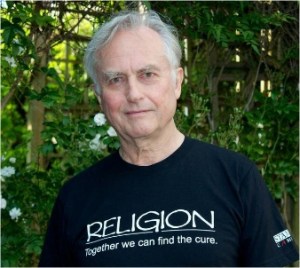 Atheist Richard Dawkins said, “The God of the OT is . . . a petty, unjust . . ., a vindictive, bloodthirsty . . . bully.” His evidence: God’s command to King Saul to “attack the Amalekites and totally destroy everything that belongs to them”—including “men and women, children and infants” (1 Sam. 15:3).
 After the end of a long drive from Philadelphia to Houston to take my youngest child to college, it was nice to sit in a cool auditorium, listening to several speakers in a program called “New Families Orientation.” As was customary, before the speakers approached the podium, the master of the ceremony read off a long of list of their academic pedigrees and accomplishments. Although it wasn’t quite the same sensation as seeing a Harvard Medical School diploma hung on the office of my new doctor, knowing that these speakers weren’t “hacks” put me at ease.