December 12, Saturday

Editor’s Note:  The AMI QT devotionals for Dec. 12-13 are provided by Tina Hsu, who presently serves as an intern at Church of Southland.  She will head to E. Asia in early 2016 to serve as a preaching intern at an AMI church there.

Devotional Thoughts for Today

John 1:14

And the Word became flesh, and dwelt among us, and we saw His glory, glory as of the only begotten from the Father, full of grace and truth.

12December is an opportunity to reflect on the powerful message of Christmas. If I could sum up the message of Christmas in one word, it would be presence. There is power in “being with” people because presence communicates love. I came to grasp the power of presence for the first time during the summer after my sophomore year in college. I met with a Christian counselor once a week during that summer. The reason was, during the spring of sophomore year, I fell into mild depression. I lost a lot of joy in doing regular things. All I wanted to do was sleep so I could numb away my feelings. It was hard to study, and hard to worship! I was bearing a lot of hurt and anger towards my father, who was absent for a majority of my upbringing. During one session, as I shared my pain to my counselor, she cried and mourned with me over my pain. It was such a powerful moment. I felt like she was sincerely identifying with me in my pain. She was present with me with her ears and her heart. By her presence in my brokenness, I regained the strength to heal and to have joy. By her “being with” me, I felt like God’s love was so near to me.

Presence communicates love. This is how God communicated His love to us. The message of Christmas is the nearness of God’s presence, which He demonstrated through His Son. The Son of God took on the flesh and came to be with us. He took on the form of man and came to dwell among humanity. He left where He belonged and came to reside among the chaos and the brokenness of this world. When the Son of God became flesh, he identified with our condition. Even though His own creation didn’t acknowledge Him as God, He drew near to demonstrate the grace and truth of our heavenly Father. As we rejoice at the coming of our Savior, let’s also offer the gift of presence and “be with” those whom the Lord puts on our hearts.

Prayer: Dear heavenly Father, I praise You for sending Your Son to be with us so we can encounter Your loving presence. Fill me with Your love so I could actively demonstrate love by being with people today. In Jesus’ name. Amen.

 Bible Reading for Today: John 21 & Ecclesiastes 1


December 11, Friday

Editor’s Note:  The AMI QT devotionals for Dec. 10-11 are provided by Pastor (intern) David Son who serves at Symphony Church, Boston.  David got married this year to Grace. Congratulations!

Devotional Thoughts for Today

Esther 10:1-2

King Ahasuerus imposed tax on the land and on the coastlands of the sea. And all the acts of his power and might, and the full account of the high honor of Mordecai, to which the king advanced him, are they not written in the Book of the Chronicles of the kings of Media and Persia? For Mordecai the Jew was second in rank to King Ahasuerus, and he was great among the Jews and popular with the multitude of his brothers, for he sought the welfare of his people and spoke peace to all his people.

11Batman has been and will always be one of the greatest and well-loved superheroes. But the main reason Batman is so adored is not because he has super-human strength (he doesn’t), nor is it because he can fly (he can’t); he can’t turn invisible or shoot lasers from his eyes either. I think the thing about Batman that draws us to him is the fact that Batman is “one of us.” Yes, he fights for justice and defeats bad guys, but when it comes down to it, Batman is like us—fully human!

There is something about a powerful figure/leader being “one of us” that makes him trustworthy. No one really wants to trust a leader with whom we can’t relate to, who doesn’t really understand what it’s like to be one of us. Perhaps that is why having Mordecai at the right hand of the king was such a blessing to the Jewish people of that time. One of the most powerful people in the land was “one of them”! The Jewish people prospered because Mordecai sat at the right hand of the king.

In Jesus, we have a greater “Mordecai.” Seated at the right hand of God the Father, Jesus not only understands everything we go through, but also is Himself fully human! We have a Lord who is “one of us”! Have you ever thought to yourself, No one understands me? Today, let us draw near with confidence to our Lord who understands us completely.

Prayer

Thank you, Jesus, for being our sympathetic High Priest. Because of You, we can approach the presence of God confidently. Today, may we remember Your promise that You will be with us, even to the end of the age.

 Bible Reading for Today: John 20

QT Page Break3

Lunch Break Study

Read Hebrews 4:12-16: For the word of God is living and active, sharper than any two-edged sword, piercing to the division of soul and of spirit, of joints and of marrow, and discerning the thoughts and intentions of the heart. And no creature is hidden from his sight, but all are naked and exposed to the eyes of him to whom we must give account. Since then we have a great high priest who has passed through the heavens, Jesus, the Son of God, let us hold fast our confession. For we do not have a high priest who is unable to sympathize with our weaknesses, but one who in every respect has been tempted as we are, yet without sin. Let us then with confidence draw near to the throne of grace, that we may receive mercy and find grace to help in time of need.

Questions to Consider:

  1. According to the passage, can we hide our flaws, weaknesses, and sins from God?
  2. How can we approach God’s throne with confidence?
  3. How is Jesus able to sympathize with our weaknesses?

Notes:

  1. According to this passage, no creature is able to hide from God, but all are naked and exposed before Him. This is a simple, yet sobering, and potentially frightening truth.
  2. We are able to approach God’s throne with confidence for one reason: Jesus Christ is our High Priest. He has made atonement for us and intercedes on our behalf.
  3. Jesus is able to sympathize with our weaknesses, because He has been tempted in every respect! That means that any temptation you have felt, Jesus has felt it too. In Scripture, we only have a handful of explicit examples of Jesus being tempted. But this passage tells us that there isn’t a temptation that we’ve felt that Jesus hasn’t also felt Himself. Furthermore, Jesus overcame each of these temptations—without sinning. Looking to Jesus, we see a Lord who is familiar with our plight, and He also gives us the strength to overcome.

QT Page Break3

Evening Reflection

Imagine that your closest friend became the next President of the United States: How would your life change? What would your communication with him/her be like? Knowing that Jesus is not only the King of kings, but that He also calls you friend, how should we approach Him?

December 10, Thursday

Editor’s Note:  The AMI QT devotionals for Dec. 10-11 are provided by Pastor (intern) David Son who serves at Symphony Church, Boston.  David got married this year to Grace. Congratulations!

Devotional Thoughts for Today

Esther 9:1

Now in the twelfth month, which is the month of Adar, on the thirteenth day of the same, when the king’s command and edict were about to be carried out, on the very day when the enemies of the Jews hoped to gain the mastery over them, the reverse occurred: the Jews gained mastery over those who hated them.

10In 2010, I was on a short-term mission trip to Northeast China. Traveling to different villages, we preached and taught many pastors who had gathered from surrounding villages.  It was during one of these secret gatherings that the police barged in. Four policemen kicked the door open and immediately arrested my pastor and his translator. Within moments, he was put into the police car and driven to the police station, hours away.  I began to panic.

We did the only thing we could do: pray.  For hours and hours, we kept asking God to do something.  When we finally got in touch with the translator who called us from police station, it was not good news. Our pastor was in jail, awaiting his sentence, which was expected to be one or more of the following: a massive fine, jail-time and being added to the “blacklist” of China. The verdict would happen the next morning.

I fell asleep, but I woke up early to the sound of the Chinese locals praying; they had stayed up all night, interceding for my pastor. Soon, a car pulled up and my pastor stepped out with a huge grin on his face. “What happened?” we asked. While the chief of police was explaining all the punishments that could be inflicted upon my pastor, for some reason, his heart softened. Instead of my pastor being punished, the reverse occurred: my pastor shared the Gospel with the police chief, and he agreed not only to release him, but to begin attending church, to learn more about God!

As today’s text says, sometimes God allows “the reverse” to occur to rescue His people, thereby bringing further glory unto Himself. When the Israelites were trembling before the Philistine army, He used a shepherd boy to bring down Goliath. When Jesus was being nailed to the cross, and it seemed all hope was lost, God was actually unfolding his plan for the salvation of man. Today, let us strive to put our faith in our God, especially in the midst of trials, hardship and brokenness. “And we know that for those who love God all things work together for good, for those who are called according to his purpose.” (Romans 8:28)

Prayer

Lord, we rejoice even in our sufferings, not because they are fun, but because we know and believe that you are a God who works even with suffering to produce good.  Open our eyes today to your faithfulness that is revealed in today’s passage, and all throughout Scripture. Increase our faith as we read and meditate. In Jesus’ name, amen.

 Bible Reading for Today: John 19

QT Page Break3

Lunch Break Study

Read Matthew 14:28-33

And Peter answered him, “Lord, if it is you, command me to come to you on the water.” He said, “Come.” So Peter got out of the boat and walked on the water and came to Jesus. But when he saw the wind, he was afraid, and beginning to sink he cried out, “Lord, save me.” Jesus immediately reached out his hand and took hold of him, saying to him, “O you of little faith, why did you doubt?” And when they got into the boat, the wind ceased. And those in the boat worshiped him, saying, “Truly you are the Son of God.”

Questions to Consider:

  1. What was Peter’s rationale for stepping out of the boat, and onto the water?
  2. Why did Peter begin to sink?
  3. What is the final result of this story?

Notes:

  1. Peter reasoned that since Jesus called him, he could do anything, even walking on water!
  2. While Peter had enough faith to step out onto the water, he was afraid and began to sink when he saw the wind (i.e., circumstances). After Jesus rescues Peter, He asks him, “Why did you doubt?” Fear and doubt caused Peter to sink.
  3. This story isn’t really about whether Peter could pass a “faith test” by walking on water; rather, it was whether he and other disciples, who never left the boat, would respond to Jesus in worship. In our faith journey, while we may experience flashes of great faith, we are likely to encounter many moments of doubts and fear in which we would need God’s grace and mercy. Either way these should lead us to worship Him.

QT Page Break3

Evening Reflection

Today we talked about faith, especially in light of hardships. The Bible says, “Faith comes from hearing” (Romans 10:17). Have you listened for God’s voice today? If not, take a moment to meditate on today’s Scripture; pray and ask if there is something He wants to say to you.

December 9, Wednesday

Editor’s Note: The AMI Quiet Time for today is provided by Cami King of JCC.

Devotional Thoughts for Today

Esther 8:15-17
Then Mordecai went out from the presence of the king in royal robes of blue and white, with a great golden crown and a robe of fine linen and purple, and the city of Susa shouted and rejoiced. 16 The Jews had light and gladness and joy and honor. 17 And in every province and in every city, wherever the king’s command and his edict reached, there was gladness and joy among the Jews, a feast and a holiday. And many from the peoples of the country declared themselves Jews, for fear of the Jews had fallen on them.

9There are moments in life when God’s faithfulness comes into focus, when we go past trusting in God’s promises to experiencing them in their fullness in our personal lives. Those are precious moments. Mordecai and the people of God are having one such moment. They have walked through hardship and persecution, through fear and uncertainty, they’ve fasted and prayed, hoped and depended upon the Lord; and now they are delighting in the fruit of God’s faithfulness. And moreover, because of their dependence upon God through difficulties, many others have come to know the Lord as well – they saw that God’s blessing was upon the Jews and wanted in.

In John 12:32, Jesus says, “And I, when I am lifted up from the earth, will draw all people to myself.” In this, of course, Jesus was predicting the manner in which He would die and the pervasive salvation that would be made available to all people as a result. And in a small way, when God’s people walk faithfully through adversity, we are used by God to make Him known (lift Him up) and draw others into a relationship with Him. This should encourage us whenever we face adversity – knowing that the work God is doing in and through us is more than worth the sacrifice. But even more so than encouragement to persevere, our passage for today should elate us at the possibilities of what the end result will be for those who trust in the Lord.  God is truly able to do immeasurably more than all we ask or imagine, and His track record shows that He is not only able, but He is willing.

Though we may find ourselves walking through difficulties and facing obstacles, may we be encouraged by the story of Mordecai, Queen Esther, and the people of God! Let us remind our hearts of God’s faithfulness and celebrate not only what He will do for us, but what He is able to do in the hearts of others through us.

Prayer: Heavenly Father, thank you for your faithfulness. You are a promise keeper and I trust in You. Help me to walk faithfully through the storms of life, for I know they will come, and to wait upon You. In Jesus’ name. Amen.

 Bible Reading for Today: John 18

QT Page Break3

Lunch Break Study

Psalm 23:1-6

The Lord is my shepherd; I shall not want.
    He makes me lie down in green pastures.
He leads me beside still waters
    He restores my soul.
He leads me in paths of righteousness
for his name’s sake.

Even though I walk through the valley of the shadow of death,
I will fear no evil,
for you are with me;
your rod and your staff,
they comfort me.

You prepare a table before me
in the presence of my enemies;
you anoint my head with oil;
my cup overflows.
Surely goodness and mercy shall follow me
all the days of my life,
and I shall dwell in the house of the Lord
forever

Questions to Consider:

  1. What keeps David from fearing evil in verse 4? How have you experienced the truth of his words when you walked through valleys?
  2. What do you think it means that goodness and mercy shall follow (v. 6)? How have you experienced this in your life?

Notes:

  1. One Bible translation renders “valley of the shadow of death” as “darkest valley” – this accurately describes the feeling of suffering. It’s hard to make sense of what’s going on around us; we can’t see very far ahead of us, and we definitely can see all the way to the end of the struggle. But David does not fear because the Lord walks through the valley with him. Not only does David have the comfort of not going alone in the dark, but he has the reassurance of knowing that He is with the One who knows all and holds all power in His hands.
  2. What is translated as “follow” can easily be translated “pursue” – and I think the latter paints a better picture of God’s care for us. God’s goodness and mercy (loyal-love) are so great and so persistent that they hunt us down, no matter what dark valley we’ve stumbled into. His love will find us and care for us.

QT Page Break3

Evening Reflection

But this I call to mind,
and therefore I have hope:

22 The steadfast love of the Lord never ceases;
his mercies never come to an end;
23 they are new every morning;
great is your faithfulness.
24 “The Lord is my portion,” says my soul,
“therefore I will hope in him.”

25 The Lord is good to those who wait for him,
to the soul who seeks him.
26 It is good that one should wait quietly
for the salvation of the Lord.
(Lamentations 3:21-26)

Spend some time meditating on these truths tonight (read, then reread – slowly and thoughtfully – and contemplate with the Lord). Allow the Holy Spirit to use them to minister to you in whatever you may be facing.

December 8, Tuesday

Editor’s Note: The AMI Quiet Time for today are provided by Cami King of JCC.

Devotional Thoughts for Today

Esther 7:7-10
The king arose in his anger from drinking wine and went into the palace garden; but Haman stayed to beg for his life from Queen Esther, for he saw that harm had been determined against him by the king. Now when the king returned from the palace garden into the place where they were drinking wine, Haman was falling on the couch where Esther was. Then the king said, “Will he even assault the queen with me in the house?” As the word went out of the king’s mouth, they covered Haman’s face. Then Harbonah, one of the eunuchs who were before the king said, “Behold indeed, the gallows standing at Haman’s house fifty cubits high, which Haman made for Mordecai who spoke good on behalf of the king!” And the king said, “Hang him on it.” 10 So they hanged Haman on the gallows which he had prepared for Mordecai, and the king’s anger subsided.

Saddam_2If I were to respond to the ending of Haman’s story in emojis, I would have to use the little face with wide eyes, raised brows, and utter confusion (sorry to android users for the lost pop culture reference). At the start of this narrative, it’s certainly hard to see this ending coming. I’m sure it caught Haman by surprise as well. We’ve all heard the saying, “Evil never prospers.” As kids we might have been told this by our parents or teachers who caught us doing something underhanded or conniving or deceitful (as most children begin to do after their toddler years). But from the story of Haman, we learn that not only will evil not prosper, but it will have the absolute averse effect in our lives.

As believers, we are called to a life of holiness. We are called to live as Jesus would in our place and to honor and exalt God (make Him famous) through our lives. And while this is our calling (and a lofty one at that), we still find ourselves living in the real world where we are tempted to scheme with the best of them. Whether it’s intentional and malicious (like outright slander, lying on our taxes, lying on our resumes, cheating on a test) or inadvertent and seemingly innocuous (like work gossip, representing someone in an unfavorable light to make ourselves look better, taking credit for something we didn’t do), our human nature leads us to “evil” quite naturally. But may we learn a hard lesson from the story of Haman, that all the evil we do, especially against others, will at some point or another come back to haunt us – and often times in painfully ironic ways. 

It’s easy to plot evil to get ahead or even in response to those who’ve harmed us, but may we choose instead the path of righteousness (and forgiveness). Not only is it a better road as we are protected from the potential painful consequences, but the God who was faithful to Esther will be faithful to all who choose righteousness as well.

Prayer: “How blessed is the man who does not walk in the counsel of the wicked, nor stand in the path of sinners, nor sit in the seat of scoffers!  But his delight is in the law of the Lord, and in His law he meditates day and night. He will be like a tree firmly planted by streams of water, which yields its fruit in its season and its leaf does not wither; and in whatever he does, he prospers.  Let it be so with me, O Lord.”  In Jesus’ name. Amen.

 Bible Reading for Today: John 16

QT Page Break3

Lunch Break Study

Psalm 37:1-11

Do not fret because of evildoers,
Be not envious toward wrongdoers.
For they will wither quickly like the grass
And fade like the green herb.
Trust in the Lord and do good;
Dwell in the land and cultivate faithfulness.
Delight yourself in the Lord;
And He will give you the desires of your heart.
Commit your way to the Lord,
Trust also in Him, and He will do it.
He will bring forth your righteousness as the light
And your judgment as the noonday.

Rest in the Lord and wait patiently for Him;
Do not fret because of him who prospers in his way,
Because of the man who carries out wicked schemes.
Cease from anger and forsake wrath;
Do not fret; it leads only to evildoing.
For evildoers will be cut off,
But those who wait for the Lord, they will inherit the land.
10 Yet a little while and the wicked man will be no more;
And you will look carefully for his place and he will not be there.
11 But the humble will inherit the land
And will delight themselves in abundant prosperity. 

Questions to Consider:

  1. Do you find yourself “fretting because of evil doers” or “envious toward wrong doers”? What does the psalmist instruct us to do instead?
  2. Who are the “wrongdoers” in your life? What do we learn is the fate of those who do evil? How should this encourage us to respond to them?

Notes: 

  1. If we’ve ever been victimized or wronged by anyone else, especially in a painful or habitual manner, we can relate to David in his temptation to worry over these things. Moreover, if we’ve ever tried to live honestly and found that those who choose to take shortcuts continue to get ahead, we may have experienced envy toward them. But we are challenged instead to trust in the Lord and continue to be faithful. God will take care of the rest as we delight ourselves in Him. We must also be careful not to become angry lest we fall into evil of our own.
  2. The scripture is clear – their end is destruction. And not the kind of destruction we might want to bring up on them in our anger, but God’s righteous judgment. This should lead us to have hearts of compassion and concern for them – God’s judgment is no small thing. We might pray for them, or be encouraged to love them in hopes that God might soften their hearts and change their ways.

QT Page Break3

Evening Reflection

Be still before the LORD and wait patiently for him; do not fret when people succeed in their ways, when they carry out their wicked schemes. (Psalm 37:7)

Are you facing any opposition or adversity today? Take some time tonight to be still before the Lord. Offer Him your cares and rest in His promises to protect and provide. Commit anew to walking in the path of righteousness, no matter the cost, and praise God for His good plans to prosper you through every circumstance.

December 7, Monday

Editor’s Note: The AMI Quiet Time for today are provided by Cami King of JCC.

Devotional Thoughts for Today

Esther 7:1-6
Now the king and Haman came to drink wine with Esther the queen. And the king said to Esther on the second day also as they drank their wine at the banquet, “What is your petition, Queen Esther? It shall be granted you. And what is your request? Even to half of the kingdom it shall be done.” Then Queen Esther replied, “If I have found favor in your sight, O king, and if it pleases the king, let my life be given me as my petition, and my people as my request; for we have been sold, I and my people, to be destroyed, to be killed and to be annihilated. Now if we had only been sold as slaves, men and women, I would have remained silent, for the trouble would not be commensurate with the annoyance to the king.” Then King Ahasuerus asked Queen Esther, “Who is he, and where is he who would presume to do thus?” Esther said, “A foe and an enemy is this wicked Haman!” Then Haman became terrified before the king and queen.

7The story of queen Esther is a familiar one. Esther, with fear and trembling, goes before the king to make a request that could cost her life. Yet she does so knowing that it was what she must do to save her people, believing the potential sacrifice to be more than worth the potential outcome. Her confidence, as we learned yesterday, came from the Lord her God, whom she knew was at work in the unseen to protect and defend His people. And we see today that her boldness and courage paid off. She was granted her request before a king with whom she found favor – and many were saved as a result. What an amazing opportunity and immense power available to Esther. And what a worthy way to utilize it!

As I read through this familiar story again, I was reminded that believers today are far more like queen Esther than we might think. We too have the opportunity to approach the throne of a King who holds enough power in his hand to incite fear and trembling in all who dare to draw near. Yet, much like the response of King Ahasuerus to Esther’s request, our King, the King of Kings, has a compassionate disposition toward each of us and delights in giving us the things for which we ask (see John 14:14). Yet, how many of us realize the power made available to us because of our ability to approach God’s throne and ask of the Lord? Moreover, when we do come before God with our requests, what is it that we ask for? Most of us ask for things for ourselves and for our loved ones and maybe for a few good friends. But Esther made a request that would save a whole nation. She offered her life and asked for something great. What will we ask for? What are we willing to offer? We can ask for the pedestrian and the possible (success and wealth and comfort) or we can ask for the Kingdom… we can ask for the nations… and our God delights in giving them to us.

“Bold prayers honor God, and God honors bold prayers. God isn’t offended by your biggest dreams or boldest prayers. He is offended by anything less. If your prayers aren’t impossible to you, they are insulting to God.” (Mark Batterson, Circle Maker)

Prayer: Almighty God, thank you for your compassion toward me and your willingness to listen to my prayers and move on my behalf. Give me the courage to pray bold prayers. Give me the vision to pray impactful prayers. Give me the conviction to pray according to your will for the world. May you accomplish great things through me as I offer you my life and my requests.

 Bible Reading for Today: John 16

QT Page Break3

Lunch Break Study

Hebrews 4:14-16

14 Therefore, since we have a great high priest who has passed through the heavens, Jesus the Son of God, let us hold fast our confession. 15 For we do not have a high priest who cannot sympathize with our weaknesses, but One who has been tempted in all things as we are, yet without sin. 16 Therefore let us draw near with confidence to the throne of grace, so that we may receive mercy and find grace to help in time of need.

Questions to Consider:

  1. What does the writer of Hebrews encourage believers to do in this passage? What hinders you from doing this in your life?
  2. What should motivate us to do what the writer of Hebrews is calling us to do in this passage? How does this encourage you?
  3. Are there some areas in your life that are in need of God’s mercy and grace to help in a time of need? Spend some time offering those things to the Lord with boldness and confidence.

Notes: 

  1. The writer of Hebrews encourages us to come to God with confidence (boldness) and ask for his help (grace and mercy) in our times of need. Many of us are hindered from doing this for a number of reasons. We may not feel worthy of God. We may not fully believe he will help us if we ask. We may be self-reliant and think we can take care of things on our own. Some of us are just plain lazy when it comes to prayer. Whatever it may be, anything that hinders us from approaching God in times of needs, prevents us from receiving the grace and mercy He’s made available to us.
  2. We should be motivated to come to God for help in times of need by our knowledge of who Jesus is and what He has done for us. Jesus became one of us and walked on this earth and lived a life just like we do. And while He was without sin, he does very much empathize with our struggles and our needs. This should give us all the more confidence when we come to Him.
  3. Spend some time in personal prayer.

QT Page Break3

Evening Reflection

Spend some time reflecting on this morning’s quotation:

“Bold prayers honor God, and God honors bold prayers. God isn’t offended by your biggest dreams or boldest prayers. He is offended by anything less. If your prayers aren’t impossible to you, they are insulting to God.” (Mark Batterson, Circle Maker)

What are the situations around the world most in need of God’s help? Who are the people around you most in need of God’s grace and mercy at this time? Are there any bold prayers God is calling you to pray in response to these needs? Spend some time listening to the Holy Spirit and seeking God’s courage and vision for these areas. Then end in prayer accordingly.

December 6, Sunday

Editor’s Note: The AMI Quiet Times for Dec. 5-6 are written by Doug Tritton of Symphony Church.

Devotional Thoughts for Today

Esther 6:12-13

Then Mordecai returned to the king’s gate. But Haman hurried to his house, mourning and with his head covered. And Haman told his wife Zeresh and all his friends everything that had happened to him. Then his wise men and his wife Zeresh said to him, “If Mordecai, before whom you have begun to fall, is of the Jewish people, you will not overcome him but will surely fall before him.”

6If you have been following the NFL this season, you know that the Carolina Panthers are currently undefeated. Out of eleven games played, they have won eleven – no one has beaten them. Their quarterback, Cam Newton, has been quite dominant this season leaving many wondering, can he and the Panthers be overcome?

When Mordecai earned the praise and honor from the king, Haman was humiliated. He was already plotting against Mordecai and the Jewish people, but here he saw his foe being honored by his boss. How humiliating! But he probably thought his plan could still work.  However, adding fuel to the fire in Haman’s heart in that moment of weakness, Haman’s wife and friends told him, “Haman, you will lose. You cannot overcome the Jewish people.” Just like the Panthers cannot be overcome this season, the Jewish people could not be overcome.

Why is that? Because of the LORD. The book of Esther does not ever explicitly mention the name of the LORD, but His name is implied here. When the people say that the Jewish people cannot be overcome, they really mean that the LORD cannot be overcome. And how very true that is! He cannot be overcome – not then and not now.

In our own lives, we must remember that just as the Jewish people could not be overcome, we also cannot be overcome, because we also belong to the LORD. When we face adversity, when the going gets tough and we feel overcome, let’s remind ourselves that we are on the undefeated team. We belong to the LORD and He shall not be overcome!

Prayer: Lord, thank You that we are Yours. Help us to remember that since we belong to You, we cannot be overcome. Thank You for overcoming the world; we pray for Your strength to overcome the adversity in our own lives. May we not lose hope but rather cling to You through every trial.

 Bible Reading for Today: John 15

December 5, Saturday

Editor’s Note: The AMI Quiet Times for Dec. 5-6 are written by Doug Tritton of Symphony Church.

Devotional Thoughts for Today

Esther 6:1-3

On that night the king could not sleep. And he gave orders to bring the book of memorable deeds, the chronicles, and they were read before the king. And it was found written how Mordecai had told about Bigthana and Teresh, two of the king’s eunuchs, who guarded the threshold, and who had sought to lay hands on King Ahasuerus. And the king said, “What honor or distinction has been bestowed on Mordecai for this?” The king’s young men who attended him said, “Nothing has been done for him.”

5Have you ever done something, thinking you would earn recognition, only to find that no recognition or honor was given? That can often be quite painful. It feels good to be recognized, to get that high-five or pat on the back or that “good job.” But sometimes, no one notices what we do. We are left hanging, like an unreciprocated high-five.

In Esther 2, Mordecai helped stop a plot against the king’s life. He and Esther foiled this plot and thus saved the king from being murdered. Yet, no honor was seemingly given to Mordecai for helping the king; his hand was raised for that high-five, but none was given.

But here in Esther 6, as the king was going through the book of memorable deeds, he found the good deed that Mordecai had done for the king. He learned that no honor had been given to Mordecai. Later in the chapter we see the king bestowing great honor on Mordecai, much to the humiliation of Haman.

In our own lives, we may feel like the good deeds we do go unnoticed. We may feel like there is no reason to keep serving or to continue loving others. Maybe we are close to giving up. But remember that verse in Galatians 6:9, “And let us not grow weary of doing good, for in due season we will reap, if we do not give up.” God has His own book of memorable deeds—and He knows everything we do. No good deed will go unnoticed by Him.

Though we may not see fruit today or may not receive recognition from others, let’s press on in the kingdom work, knowing that our God sees all. Let us look forward to that day when we shall stand before Him and hear Him say to us, “Well done, good and faithful servant.” He will surely not leave us hanging.

Prayer: Lord, thank You that You see all we do. Help us to persevere in Your work knowing that we will reap a harvest in due time. And help us not give up but rather keep our eyes on You. Though the world may try to harden our hearts and stop us from loving others, give us strength to keep on going for Your glory.

 Bible Reading for Today: John 13-14

December 4, Friday

Editor’s Note: The AMI Quiet Time for today is provided by Christine Chang of GCC.

Devotional Thoughts for Today

Matthew 6:1-5

Beware of practicing your righteousness before other people in order to be seen by them, for then you will have no reward from your Father who is in heaven. 2 Thus, when you give to the needy, sound no trumpet before you, as the hypocrites do in the synagogues and in the streets, that they may be praised by others. Truly, I say to you, they have received their reward. 3 But when you give to the needy, do not let your left hand know what your right hand is doing, 4 so that your giving may be in secret. And your Father who sees in secret will reward you. 5 And when you pray, you must not be like the hypocrites. For they love to stand and pray in the synagogues and at the street corners, that they may be seen by others. Truly, I say to you, they have received their reward. 6 But when you pray, go into your room and shut the door and pray to your Father who is in secret. And your Father who sees in secret will reward you.

4I remember one time as a college student, I posted a photo on Facebook showcasing all the books I had recently purchased, captioned with a declaration that I would be reading them all throughout winter break.  I received so many approving “likes” and comments that spoke to my productivity and refined choice of leisure, but here’s a belated update to that highly publicized goal of mine: I didn’t even finish a single book.  While it wasn’t my plan to deliberately deceive people, the acknowledgement I received from sharing my goal gave me a false sense of accomplishment and thereby weakened my resolve to actually read.

Contrary to a commonly held assumption that sharing personal goals with others helps us complete them, a recent article from The Berkeley Science Review titled, “When Telling Others About Your Goals Compromises Them,” explains that when it comes to identity goals (goals to achieve a certain identity), receiving social recognition before enacting on a plan can lead to “a premature sense that one already possesses the desired identity.”

While there’s certainly a time and place for accountability, our present culture thrives on over-sharing the details of our lives, especially through social media.  It gets harmful when we forget what it feels like to do things in secret, without expecting any human acknowledgment at all.  In Matthew 6:6, when Jesus tells us to “go into your room and shut the door and pray to your Father who is in secret,” the room described here was commonly located at the center of a house to store dry goods, and it had no windows.  Tim Keller points out that of all the spiritual disciplines, the one that nobody can see is secret prayer—and its absence or presence in our lives reveals our true motive for following God.

When you are all by yourself, do you pray naturally?  Do you often feel the need to be recognized for reading the Bible or praying? As humans, I think we’ve all engaged in spiritual acts to satisfy our need for human approval, but as we enter a secret time of prayer, God reveals the hollowness of our actions and then engages our souls with His grace and mercy until His presence is our sole desire.  Let’s continue praying corporately while also developing a secret prayer life that deepens our awareness that Jesus alone can satisfy.

Prayer: Father, I’m sorry for the times when I’ve outwardly lived a life for You but inwardly satisfied my own desires.  I want to experience the sweetness of praying to You in secret, where my words are honest and vulnerable; where the stillness quiets my soul; where Your gentle whisper penetrates my heart. Amen.

 Bible Reading for Today: John 12

QT Page Break3

Lunch Break Study

(Provided by Pastor Ryun Chang)

Read Proverbs 18:24: A man of many companions may come to ruin, but there is a friend who sticks closer than a brother.

Micah 7:5b: Put no trust in a neighbor; have no confidence in a friend . . .

Jn. 15:13: Greater love has no one than this, that someone lay down his life for his friends.

Question to Consider

  1. What do these seemingly disparate verses suggest?
  2. What is the major difference between the biblical friendship as opposed to Facebook friendship?
  3. Abraham was called God’s friend (James 2:23). What made him so?  What kind of a friend are you to the Lord?  What does that even mean?

Notes

  1. While we need friends, we don’t need many friends; instead, we need few true ones.
  2. The Facebook friendship is quantitative and artificial, and exists, for the most part, to amuse each other; the biblical friendship is qualitative and real, and exists to help each other sacrificially.
  3. The entire James 2:23 reads, “And the scripture was fulfilled that says, ‘Abraham believed God, and it was credited to him as righteousness,’ and he was called God’s friend.” It seems like one key prerequisite to being God’s friend is having faith in Him. What does that mean? That we have the confidence that God will do what He said He would.  Do you have that confidence in God? If you do, then, you are on your way to becoming His friend!

QT Page Break3

Evening Reflection

We talked about friendship today.  Haman didn’t know until it was too late that he really had no friends.  Did you get to speak to any of your friends today?  How would you appraise the depth of your friendship?  Do you know what to pray for them?  If not, then, perhaps your relationship needs a major tune-up.  The first step always is to go to our ultimate Friend, God, and ask Him to empower and motivate us to be a trustworthy friend.  Pray.

December 3, Thursday

Editor’s Note: The AMI Quiet Times from Nov. 30-Dec. 3 are provided by Pastor Ryun Chang.

Devotional Thoughts for Today

Esther 3:1, 6; 7:10

After these events, King Xerxes honored Haman son of Hammedatha, the Agagite, elevating him and giving him a seat of honor higher than that of all the other nobles. . . . 6 [H]aving learned who Mordecai’s people were, he scorned the idea of killing only Mordecai. Instead Haman looked for a way to destroy all Mordecai’s people, the Jews, throughout the whole kingdom of Xerxes. . . . 7:10 So they impaled Haman on the pole he had set up for Mordecai. Then the king’s fury subsided.
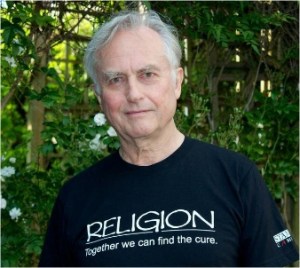
3Atheist Richard Dawkins said, “The God of the OT is . . . a petty, unjust . . ., a vindictive, bloodthirsty . . . bully.”  His evidence: God’s command to King Saul to “attack the Amalekites and totally destroy everything that belongs to them”—including “men and women, children and infants” (1 Sam. 15:3).

In light of this, exonerating God from Dawkins’ charge would be impossible; but the meta-narrative regarding Israel and Amalek begins about 400 years earlier when Israel came out of Egypt and was roaming the desert in search of the Promised Land.  In the process, Israel encountered many battles. From the perspective of several Canaanite nations, they had a legitimate beef against Israel, since they sought to cross other nation’s land to get to her destination (Deut. 2:27-30).  But that wasn’t the case with the Amalekites who actively searched for Israel to destroy it.  Thus, God, before telling Moses, “When the LORD . . . [gives] you . . . the land . . . as an inheritance, you shall blot out the memory of Amalek under heaven” (Deut. 25:19), reminds him: “Remember what the Amalekites did to you along the way when you came out of Egypt.  When you were weary and worn out, they met you on your journey and cut off all who were lagging behind; they had no fear of God” (18).

So, why was God so livid against Amalek?  Inasmuch as Israel was God’s chosen instrument to carry out His redemptive plan, Amalek, in effect, was Satan’s tool to destroy it.  From the very outset, the Amalekites sought to eliminate Israel from the face of the earth. So what was in it for Satan?  Once Israel was gotten rid of, so was God’s redemptive plan—for it was through Israel that the Messiah was going to come.  It really was a zero-sum “game”: if the Amalekites prevailed, then the “dominion of darkness” would have continued to envelop the world; if Israel prevailed, then the imminent threat against God’s plan would have been thwarted.

But evidently, Saul’s disobedience left some members of King Agag’s family alive, which, 500 years later, resulted in the rise of Haman the Agagite who tried to destroy all the Jews in the Persian Empire, including the ones in Jerusalem.  Had he succeeded, God’s redemptive plan for the world would have been obliterated.  This was why God ordered Saul to eliminate all the Amalekites—for His love for the world was such that God risked being labelled as a “bloodthirsty bully” in order to send the Savior to redeem us from the miserable penalty of sin.  Dawkins is wrong—again!  “God is love” (1 Jn. 3:8) and “light; in him there is no darkness” (1:5).  With that in mind, go take on the day in Him.

Prayer

Lord, I’m so thankful that I possess a life that is eternal that can never be taken away.  But it’s sad when I realize that I continue to distrust You and doubt Your promises—forgive me.  I’m once again reminded today that Your providence is real, and that I can truly trust in Your guidance of my life.  Thank You.

 Bible Reading for Today: John 11

QT Page Break3

Lunch Break Study

Read  Esther 6:5-6: His attendants answered, “Haman is standing in the court.” “Bring him in,” the king ordered. 6 When Haman entered, the king asked him, “What should be done for the man the king delights to honor?” Now Haman thought to himself, “Who is there that the king would rather honor than me?” (Remember that the king had in mind Mordecai, Haman’s enemy.)

Luke 14:7-11: When [Jesus] noticed how the guests picked the places of honor at the table, he told them this parable: 8 “When someone invites you to a wedding feast, do not take the place of honor, for a person more distinguished than you may have been invited. 9 If so, the host who invited both of you will come and say to you, ‘Give this person your seat.’ Then, humiliated, you will have to take the least important place. 10 But when you are invited, take the lowest place, so that when your host comes, he will say to you, ‘Friend, move up to a better place.’ Then you will be honored in the presence of all the other guests. 11 For all those who exalt themselves will be humbled, and those who humble themselves will be exalted.”

Question to Consider

  1. What do Haman and the guests who picked the places of honor at the table have in common?
  2. What is the lesson of the parable, and how would it have helped Haman?
  3. What makes us act like Haman and these guests? How are you doing with humility?

Notes

  1. Both assumed that they were better than others, thus they felt entitled to a better treatment.
  2. This lesson about humility will save you from a ton of embarrassment. If Haman would have understood this parable, he would have asked the king whom he had in mind to honor before simply assuming that he, himself, was the man the king wanted to honor.  Lack of humility and wanton assumption always go hand-in-hand.
  3. A sense of entitlement: for some, it takes no more than a mere college degree to feel like they are so much better than others. Just take Christ’s advice: stay humble and don’t assume that you are the most decorated and educated person in the room—you are not!

QT Page Break3

Evening Reflection

God’s providence often seems accidental or coincidental. But it is when our favorable circumstances are seen through the eyes of faith in a personal God that we come to realize that it was God after all.  As you look back to today, was there a moment (however insignificant of a matter) in which you sensed that it was God who was favoring you once again?  Reflect.  Thank Him.