Pastor Ryun Chang (AMI Teaching Pastor, Ph.D.) will present a series of blogs, dealing with various issues raised in the recent election that showed a deep divide, impacting both society at large and the church. The thoughts presented are processed through the lens of the Radical-Middle (both/and), personal narratives, and pastoral concerns. Your rational feedback is welcomed.
Disclaimer: The views expressed here do not necessarily represent the respective views of AMI pastors.
DEVOTIONAL THOUGHT FOR TODAY
Hooray to Social Justice, but Whose Social Justice?
Isaiah 1:17: Learn to do good; seek justice, correct oppression; bring justice to the fatherless, plead the widow’s cause.
Leviticus 19:15: You shall do no injustice in court. You shall not be partial to the poor or defer to the great, but in righteousness shall you judge your neighbor.
Proverbs 28:5; 29:7: Evil men do not understand justice, but those who seek the Lord understand it completely. The righteous care about justice for the poor, but the wicked have no such concern.
 In our world, there seems to be a new name above all names, the purpose above all purposes—the almighty ideal of social justice. It would be troublesome, however, if social justice is viewed in the same light as the saying, “One man’s art is another man’s pornography.” Yet there have been many different conceptions of justice throughout the ages. Thrasymachus in Plato’s Republic says that justice is simply whatever the strongest in society have deemed to be just (“Might makes right”). The 18th century philosopher David Hume said that justice is a human convention invented for the collective self-interest. Popular, contemporary theories of social justice revolve around ending the oppression of identity-categorized minorities based on race, gender, and sexuality.
A passion for social justice is good, but if it has no answer to the question, “Whose social justice?” it can be a great force for error and evil. Take abortion as an example: both sides of the debate think that they are champions of social justice—pro-choicers see themselves as defenders of women’s rights and pro-lifers as protectors of unborn human dignity. But they can’t both be supporters of justice. If pro-choicers are correct, then pro-lifers are seeking to repressively withhold from millions of women their basic bodily autonomy, a grievous injustice. But if pro-lifers are right, then abortion is literally the mass genocide of children—dwarfing the total number of deaths in the history of the U.S., caused by notable ills like war, lynchings, or police shootings.
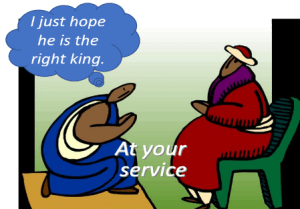 Somebody is terribly mistaken here! As Isaiah 1:17 indicates, a desire for justice is good, but if predicated on a reckless theory of justice, such passion can be a great force for injustice. We can have all the fervor of a patriotic warrior as we march off to the grand, glorious war for social justice, but if we have pledged allegiance to the wrong ideological king, we may find ourselves making the nations much worse off. An earnest search for wisdom, knowledge, and God’s justice can go a long way toward making sure our social justice arrows hit the right targets.
One man’s justice is another’s injustice. It is a reality that there are many good, reasonable people who radically differ on the nature of justice. Spiritual discernment is needed to prudently sift through the various claims and mandates concerning things like racial fairness, sexual oppression, human rights, socio-economic opportunity, and religious freedom.
Here, we, as believers, must allow God’s Word to guide us during the formation of our views. Today’s Scriptures remind us, first, to seek a justice that shows no favoritism to anyone: whether white or black, rich or poor, traditionally marginalized or historically privileged, for to do otherwise is to dishonor God; second, to seek a justice that looks out for those who are weak and easy to overlook, showing no partiality but making sure that they are included as part of justice for all; and finally, to seek a justice that obeys God, no matter how counter-cultural, unpopular, or unpalatable it might be (2 Cor. 10:5), for our God is a good God and in His social justice alone do we place our hope!
Prayer: God, before Your mighty and holy presence, I ought to tremble, for I’m weak and unholy. But in Your justice and love, You had your Son to die to atone for my sins, so that I can be Your child who need not fear. Help me to be just and loving, so that I can be Your witness in this hopeless world. Amen.
Bible Reading for Today: Judges 8
LUNCH BREAK STUDY
Read Col. 2:16-7: Therefore let no one pass judgment on you in questions of food and drink, or with regard to a festival or a new moon or a Sabbath. 17 These are a shadow of the things to come, but the substance belongs to Christ.
Jn. 8:11: And Jesus said, “Neither do I condemn you; go, and from now on sin no more.”
Gal. 6:2: Bear one another’s burdens, and so fulfill the law of Christ
Questions to Consider
- Is it true that God’s Word itself has undergone changes? For instance, Paul says here that it is okay to eat the kind of food that was prohibited in the OT (1 Tim. 4:4-5). How do you explain that?
- What is the law of Christ? What relationship does it have with the laws found in the OT?
- Based on the findings from questions 1 & 2, would it be reasonable to include that God’s Word continues to be authoritative in all matters, including social justice?
Note
- Yes and no—the form has changed but not the meaning. The strict dietary laws were given to the Jews in antiquity to distinguish Israel from the surrounding pagans. Maintaining the ethnic purity of the Jews was important, since God had preordained Jesus to come from the lineage of David, the tribe of Judah of Israel. Today, such dietary injunction has no value to the NT believers, who are, nonetheless, expected to distinguish themselves from their surroundings through holy living (i.e., not living according to the norms and values of the world).
- The law of Christ refers to all ethical, moral and theological teachings recorded in the NT. There are many OT laws that are no longer relevant in the NT in a literal sense (e.g., Heb. 10:18). For instance, stoning a sinner is not part of the law of Christ. But, most moral commands in the OT have been transferred to the law of Christ, such as injunction against adultery, stealing, love of money, etc.
- Yes, God’s Word continues to be authoritative because the meaning has not changed—and that’s what matters the most!
EVENING REFLECTION
We began the day talking about social justice and the need to base it on the unchanging Word of God, which is “alive and active. Sharper than any double-edged sword, it penetrates even to dividing soul and spirit, joints and marrow; it judges the thoughts and attitudes of the heart” (Heb. 4:12).
So, how is your attitude toward the Scripture? Can you really say you cannot live without it (Mt. 4:4)? Regardless of how you respond, a better barometer is what you actually do with your Bible: Do you read it? How often? Do you study it? How seriously? Meditate on the godly habit of the Berean Christians and pray for God’s strength to imitate them.
Acts 17:11: Now the Berean Jews were of more noble character than those in Thessalonica, for they received the message with great eagerness and examined the Scriptures every day to see if what Paul said was true.
 The AMI QT Devotionals for January 28-29 are provided by Joanna Tzen. Joanna graduated from U. Penn and currently works in Philadelphia. She married Paul in 2014, and they attend Grace Covenant Church.
 Yesterday, we talked about Sabbath, but maybe there is the question of whether this is even necessary, practical, or applicable in today’s world. I know that in my own life, there were instances where I misinterpreted the need for Sabbath as a weakness. Clearly, I was equating my worth to my productivity. So if I saw a need or an opportunity was presented, I quickly accepted. Though some good still came out of those decisions, it often came at the greater expense of my relationship with God or others, or other priorities to which I was committed.
 I’ve been reading a book titled Emotionally Healthy Leader, where the author interestingly brings up the topic of the Sabbath. So what exactly is a Sabbath? Is it an Old Testament practice that we no longer observe as Christians?
 The recent United Nations Security Council’s resolution to condemn Israeli settlement in territories taken during the Six-Day War (1967) continues to stir passion on both sides. While U.S. support for Israel may not be what it used to be, Christians who believe in the literal fulfillment of end-time prophecies are squarely on the side of Israel. Yet, in the midst of this bitter conflict, we have forgotten a people whom the believers have more in common with than the Israelis.
 In 2015, while attending a conference on theological education in Turkey, I befriended a theological educator named Jiries from Jordan. He is a Palestinian. Never having met a Palestinian Christian before, I cautiously asked, “How do you feel about American Christians unilaterally supporting Israel?” Jiries answered, “It’s a matter of human interpretation of the Bible on the one hand, and God’s justice on the other.” I understood what he meant by “human interpretation,” but since I didn’t get the justice part, I asked for an explanation. The following is his story.
 Last March, no one was in a small Narita airport chapel when I entered; later, while I was reading the Bible, a young Muslim walked in. I quickly felt uncomfortable because he prayed in a prostrated position directly in front of me. Upon seeing the ceiling compass, however, I realized that I sat in a direction toward Mecca. While the scene may have looked funny to some, no distraction was going to keep this Muslim from prostrating before Allah—that’s taking one’s faith seriously and we ought to respect that!
 Shortly thereafter, a Muslim woman walked in; and before praying, she first put on her white prayer clothe. But when I glanced to see if she was praying, to my humor, I saw her fidgeting with her smartphone. I had no idea what she was searching, but seeing her sidetracked by the same gadget that distracts all of us had a strange effect of identifying with her humanity—that is, whether we are Christians and Muslims, we, as human beings, share a lot in common.
 But to say that Christians and Muslims pray to the same God would be an insult to both. I tried to demonstrate that the first time I visited a prayer room at the Hong Kong airport. Seeing that only Muslims were praying, I also wanted them to know that Christians pray earnestly and take prayer seriously just as much as Muslims do, since they typically believe that Christians don’t really pray much. First, to distinguish myself as a Christian, I knelt facing the opposite direction from the wall faced by Muslims. At the outset, I was very conscious of wanting to show an earnest praying Christian, but as my prayer got more intense, I forgot all about my surroundings. It dawned on me only after I was done praying that I was the only one left in the chapel. To the extent that any Muslims in the chapel noticed a Christian praying as fervently and extendedly as they, I hope it was a moment of distinguishing our faith. That day, nothing really happened in the prayer room: They prayed, and I did too, with no one interfering on another.
 A Christian apologist writes, “Christianity is the only true faith, all other religions are of the Devil. . . .”
 What’s substantially different among them is their afterlife strategy: Buddhism exhorts its followers to do good on earth to achieve a better reincarnation, while Islam demands that its adherents obey the Five Pillars of Faith (the confession, daily prayers, almsgiving, fast, pilgrimage to Mecca). In short, these are man’s effort to save himself. On the contrary, the Christian faith declares that since man cannot save himself because of sin, God saves him through the atoning death of His Son Jesus. In short, this is God’s effort to save man. On this account, we break with Eisenhower: Our salvation makes no sense unless it is founded on the belief in Jesus Christ.
 After reading a story about Christian mission work in a Muslim country, a reader commented, “Since when did we consider the Muslims to be unbelievers? They do not need to be converted because the Christians and Muslims believe and worship the same God.” This person’s point isn’t entirely without merit, since both the Syrian Christians and Jews referred to God as Allah before the rise of Mohammed in the 6th century. But upon a closer examination, because the original meaning attached to the name Allah underwent a dramatic makeover in the Koran, anyone who says that the Christians and Muslims worship the same God is either ignorant or condescending toward religion itself.
 As Bible-believing Christians, we ought to disagree with contrary beliefs, but if we are to love our “enemies” (i.e., those with whom we disagree), we should make some effort to know what they actually teach, and then disagree—rather than going just by secondary sources, or worse, hearsays. So when I started to study about Islam, I discovered—to my surprise— some agreeable things the Koran says about Christ.
 There was a time in elementary school when my classmates and I would feel insecure about our friendships. The only way to definitively confirm whether we were friends with someone was by way of a note with checkboxes for “Yes” or “No” and the question, “Dear so-and-so, are you my friend?” Once we were assured of our friend status, we could begin freely sharing our lives – snacks, jokes, toys, secrets, etc. – and trust that our friends would reciprocate.
 Every so often, I need to be reminded to clean my glasses. I frequently forget to do this, because it seems unnecessary— my glasses don’t look dirty. However, every time I wipe down the lenses, seeing becomes a whole new experience. I realize that over time, the small and steady accumulation of dust and dirt slowly built up and made everything unclear.