 The AMI QT Devotionals July 17-23 are written by David Son, who serves as the college pastor at Symphony Church in Boston. David, a graduate of UC Berkeley (B.S.) and Gordon-Conwell Seminary (M.Div.), is married to Grace who teaches at a public school.
DEVOTIONAL THOUGHTS FOR TODAY
“Don’t Just Do Something… Sit There”
Luke 10:38-42
Now as they went on their way, Jesus entered a village. And a woman named Martha welcomed him into her house. And she had a sister called Mary, who sat at the Lord’s feet and listened to his teaching. But Martha was distracted with much serving. And she went up to him and said, “Lord, do you not care that my sister has left me to serve alone? Tell her then to help me.” But the Lord answered her, “Martha, Martha, you are anxious and troubled about many things, but one thing is necessary. Mary has chosen the good portion, which will not be taken away from her.”

According to Barna Research, after conducting a national survey with the question “Do you read the Bible at least once a week?” the Baby Boomer generation (55+) chimed in at 49%. The millennials were the lowest group, coming in at 24%. Now I don’t know how exact those numbers are, but one thing I can say with confidence: we are currently living in the least Bible-reading generation since the printing press made the Bible available to the public.
Ironically, our information intake has skyrocketed. A study[1] conducted eight years ago showed that the average person consumes about 100,000 words a day. Since then, with the explosion of the social media, that number has grown to around 150,000. Despite the 50% increase in information we are soaking in, we are reading the Word less and less.
But not all of this is necessarily due to an antagonistic view towards God’s Word. Most people (including Christians) simply don’t read books anymore. Our culture is shifting away from reading books and moving towards faster-paced articles and news snippets, designed to give us an adrenaline shot of information. Perhaps we need to take a cue from Mary the sister of Martha. Despite the pressures of all the things she needed to accomplish, and the fast-paced lifestyle exemplified by Martha, she slowed down and sat at Jesus’ feet.
The truth is, in this information saturated culture, when we fail to slow down and sit at Jesus’ feet, reading His Word… we will inevitably miss out on the intimacy of knowing God in the stillness. Today, spend some time slowing down and spending time in stillness at the feet of Jesus.
Prayer
Holy Spirit, help me to slow down for the sake of sitting at Your feet. Help me to see that although there may be a lot of good things going on around me, only “one thing is necessary,” and that is to know You. In Jesus’ name I pray. Amen.
[1] https://bits.blogs.nytimes.com/2009/12/09/the-american-diet-34-gigabytes-a-day/?utm_source=Cultural+Commentary&utm_campaign=85f91e2825-Man+stops+talking+for+17+years&utm_medium=email&utm_term=0_51f776a552-85f91e2825-273784321&mc_cid=85f91e2825&mc_eid=1d719dca7f
Bible Reading for Today: Joshua 21-22
 In our passage today, Paul articulates one of the most frustrating realities of our human condition: the tendency to turn back to old habits. I had a powerful encounter with Jesus during the summer of my freshman year of college. It was the turning point of my life, when I decided to live my life for God.
 Back in 2010, I attended a mission trip in rural China with a small team, including the head pastor of the church I was attending at that time. It was a humbling experience to meet the over 50 Chinese house church leaders who had gathered to receive training from our team. Our team consisted of a few college students (I had just graduated from college), and our lead pastor, yet there we were in rural China, teaching and equipping underground church leaders who were old enough to be my grandparents and had withstood the hardships of government persecution. Needless to say, our lead pastor did most of the teaching/preaching.
 My grandmother lives in the rural countryside of Korea. Miles of rice paddies lie in each direction of her humble home. During high school, I had the opportunity to live with her for the better part of a week. I was thrilled, because on the first evening, she cooked the most amazing Korean food for me: rice, kimchi, soup, and fish. I went to bed utterly satisfied. The next morning I woke up to a breakfast table that looked strangely familiar: rice, kimchi, soup, and fish. But it wasn’t leftovers; it was the same food, cooked fresh. Slightly confused, I shrugged it off because the meal was certainly good enough to enjoy for a second time. And then lunch rolled around, and believe it or not, it was the same food. Cooked fresh. Again! Your suspicions are correct, nearly every single meal at my grandmother’s house consisted of virtually the exact same things. However, I did not complain, for two reasons: First of all, the food was absolutely delicious. But secondly, I realized that this is how my grandmother eats all the time! This woman had learned to enjoy and savor the same meal, breakfast, lunch, and dinner, day after day, for decades.
 Last year, there was a huge debacle concerning Epi-pens. If you’re unfamiliar with the product, it’s a handheld device that is used to inject 0.3 milligrams of epinephrine into someone who is having a severe allergic reaction or going through anaphylactic shock. The reason Epi-pens were in the news was because of the outrageous jump in price. What used to be only $50 suddenly skyrocketed to $400 per Epi-pen.
 A little while ago, I was gifted an Amazon Echo named Alexa. One of the most interesting features of this device is the “Casual Compliment Machine.” Basically when you enable this feature, you can call upon Alexa to spew all sorts of kind words to you. I haven’t tried this feature out yet, but I don’t doubt that aside from the initial hilarity, it could marginally increase my self-esteem.
 Yesterday, as we covered the above passage in Exodus, I mentioned the American proverb “The squeaky wheel gets the grease”, meaning that the loudest cries best attract help. In the passage, the Israelites cried out loudly–in their prayers, in their groaning, in their desperation for God to return their freedom.
 Do you know the saying “The squeaky wheel gets the grease?” According to Wikipedia, it’s a proverb used to “convey the idea that the most noticeable (or loudest) problems are the ones most likely to get attention.”
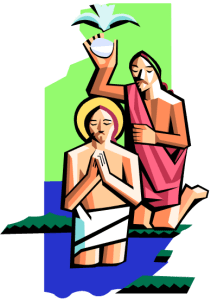 After He was baptized, three of the four Gospel writers point out that Jesus, filled with the Holy Spirit, was led into the wilderness for forty days. As I was reading the passage this time around, it dawned on me that according to conventional human wisdom, the moment right after the baptism would have been most ideal for public ministry. Think about it: when Jesus was baptized by John, the heavens opened up and the visible presence of the Holy Spirit descended upon Him. This was no secluded matter, as many had come to be baptized by John in the Jordan River. How could you not believe someone if you saw the very presence of the Holy Spirit fall upon Him, not to mention hearing an audible voice saying, “This is my son in whom I am well pleased”? If I were Jesus’ PR manager, I would have told Him to start His ministry now.
 Many of us are familiar with the story of the paralyzed man who was lowered through a roof. The faith of his friends seems central to the miracle and, of course, it is important. Yet what often goes less appreciated is the incredible hospitality of Jesus.