 The AMI QT Devotionals from October 16-22 are provided by Pastor Shan Gian, who serves as the Fenway site pastor of Symphony Church in Boston. Shan, a graduate of University of Pennsylvania and Gordon Conwell Seminary (M.Div.), is married to Jenny; and they are the proud parents of their first baby Tyler.
Devotional Thoughts for Today
“Countering the Disease of More”
Genesis 14:17-20
After his return from the defeat of Chedorlaomer and the kings who were with him, the king of Sodom went out to meet him at the Valley of Shaveh (that is, the King’s Valley). 18 And Melchizedek king of Salem brought out bread and wine. (He was priest of God Most High.) 19 And he blessed him and said, “Blessed be Abram by God Most High, Possessor of heaven and earth; 20 and blessed be God Most High, who has delivered your enemies into your hand!” And Abram gave him a tenth of everything.
 Hall of Fame basketball coach Pat Riley talked about what he called “the disease of more.” He proposed that “success is often the first step towards disaster,” because once people ( a sports team especially) have experienced success, they start thinking selfishly and catching the disease of more—wanting more money, more playing time, more benefits, more recognition, etc. This is why sports dynasties are hard to come by because teams can so easily be infected by the disease of more and start clamoring for more.
If we think about how much success and wealth we have in our society, it’s pretty clear that we suffer from a severe case of the disease of more. Everyone is striving for more income, more social status, more affirmation, more recognition, etc. If we can be honest with ourselves, we can probably see disease of more in our own hearts. Especially when we experience success and achievement, we are rarely content but only have a craving for more.
Abram was a prime patient for the disease of more in Genesis 14. He had just achieved great victory, handily defeating his overwhelming numerous enemies with great courage and tact. At this point, he should have been basking in the glow of such great success. But thankfully, Abram did not succumb to the disease of more. Instead, he encountered this mysterious man named Melchizedek, a priest of God, who we meet only this one time in the Bible. Regardless of who he is, Melchizedek came to Abram in the afterglow of his victories, blessed him, and told him that God himself—the possessor or creator of heaven and earth—is the one who had delivered him, bringing him victory. We’re not told of any conversation between Abram and Melchizedek, but what we do see is that Abram proceeded to give Melchizedek a tenth of everything.
Abram didn’t fall prey to the disease of more because he knew where his success came from. He knew that neither his victory over the kings nor his wealth was because of himself, but it was all from God Most High. Abram knew he was blessed by the grace of God. Because of this, he doesn’t succumb to the disease of more, but instead, he willingly gave away a tenth of everything as a tithe.
How can we cure the disease of more within ourselves? By acknowledging the true source of success and victory. When we experience success and victory, we are tempted to credit ourselves, but instead, we must fight to know the truth and credit God alone. For people who are infected with the disease of more, the idea of tithing is preposterous, but for those who know where their success comes from, giving away a tenth of everything is easy, because they know it’s not theirs to keep anyways. Let us seek healing from the disease of more and give God the credit and the glory!
Prayer: Jesus, I thank You for all that You have given me, and I pray that I will not give credit to myself, but always give You the glory. You are the giver of every good and perfect gift, and You deserve all of the credit and glory. Amen.
Bible Reading for Today: Acts 12-13
 I have always enjoyed movies where the good guys are few in number and facing impossible odds, with large and intimidating forces coming to destroy them. It’s inspiring to see how brave, resourceful, and cunning the underdogs are, as they repel their foes and beat the odds. I’m not fully sure why I like these kinds of stories so much, but maybe there’s something about them that makes me wonder if I would have what it takes to overcome in the face of overwhelming odds.
 At the beginning of the movie The Lion King, Mufasa brings his son Simba to the top of a mountain at sunrise, and tells him that one day he would be king of all of the land that the light touches—it’s a majestic scene. Simba’s response is simply, “Wow,” for he is in awe of how great this promise is. The scene in Genesis 13 is uncannily similar to The Lion King, as God shows Abram (later Abraham) how great His promise is to him. Abram looks up at the land, and God says that “all the land that you see I will give to you and to your offspring forever.” Here was Abraham—just one man. And though he was already advanced in age and had yet to even have a son, God, the Creator and ruler of the world, comes to him promising him that he and his many offspring would rule over all of this land. We’re not told what Abram’s immediate response was, but I can just imagine that as he stood there, looking in all directions, seeing how vast and great God’s promise was, that he just said, “Wow.”
 “It seemed like a good idea at the time…” is the start of many stories of regret. For me, every time I drive by a KFC or Popeyes, it seems like a great idea to go and get a bucket of some fried chicken; but every time I’ve done it, it’s ended up in regret because of an upset stomach or a debilitating food coma. Whether it’s making that purchase, going to that particular event, hanging out with that crowd, or dating that person, all of these things that we regret later on started off as great ideas.
 The AMI QT Devotionals from October 16-22 are provided by Pastor Shan Gian, who serves as the Fenway site pastor of Symphony Church in Boston. Shan, a graduate of University of Pennsylvania and Gordon Conwell Seminary (M.Div.), is married to Jenny; and they are the proud parents of their first baby Tyler.
 In our world, we place a premium on being first in line. If we’re about to check out of the grocery store, we hope to be the first in line at the register. When it’s opening night of a new blockbuster movie, we want to be first in line if we can. And of course when there’s a big job promotion coming up, we want to be first in line to receive it. Being first in line means more opportunities, more choices, better seats, higher income, etc. So, of course, if we have the choice, we’ll always choose to be first in line.
 Many of us tend to have a paradoxical view of wealth and possessions. While so many people strive for greater and greater wealth, these same people feel contempt towards those who have great wealth. One example of this is how much people love the classic stories of Robin Hood. They are exciting and inspiring stories about the bravery of Robin Hood and his merry outlaws as they fight injustice. Robin Hood is a hero to most because he steals from the rich to give to the poor, yet people tend to ignore the fact that what he’s doing is theft; and since most people themselves would love to be rich, Robin Hood would be stealing from them!
 The AMI QT Devotionals from October 9-15 are provided by Pastor Peter Yoon of Kairos Christian Church in San Diego. Peter is a graduate of U.C. Riverside and Talbot School of Theology (M.Div.). He and his wife Jessica have three very active children: Nathan, Abigail, and Jason.
 If you could lie about something and not only get away with it but receive nice benefits along the way, would you do it?
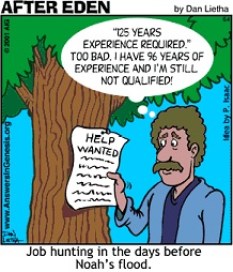 On the positive side, I thought, we’d be really good at developing some of our skillsets. Could you imagine playing basketball for 438 years of your life? You’d be really good. But on the flip side, could you imagine working for another 438 years at your job? Even if you love your job, you’re probably saying to yourself, “No thank you.”
 The AMI QT Devotionals from October 9-15 are provided by Pastor Peter Yoon of Kairos Christian Church in San Diego. Peter is a graduate of U.C. Riverside and Talbot School of Theology (M.Div.). He and his wife Jessica have three very active children: Nathan, Abigail, and Jason.
 We understand that faith plays a critical role in our Christian life. Faith is critical for our salvation. Faith moves mountains. Faith heals people. In fact, without faith, we know it is impossible to please God (Heb. 11:6). But if we are honest, we often struggle with doubts. Many in the church wonder if they are genuinely saved. Mountains still remain while healings are sparse. It’s easy to scrutinize ourselves and have a low view of our own faith.
 Years ago, Jessica and I were ministering at a retreat, and we sensed that some of the people present wanted to get closer to the Lord; yet, they were hesitating. It was there that I identified one of the reasons why believers hesitate to follow Jesus fully (with one foot on the brake): They have this notion that should they wholeheartedly commit to Jesus, God will immediately send them packing as missionaries to the “ends of the earth,” where they will suffer miserably under harsh conditions.